On heavy vehicles, ordering the wrong brake pad is expensive in a way that ordering the wrong wiper blade is not. The pad is safety-critical, the vehicle is off the road until the right one arrives, and a mismatch on a bulk order multiplies across a whole shipment. The tool that prevents all of that is cross-referencing: matching a WVA number and an OE number to the exact pad a vehicle needs. This guide explains what each number tells you, how to cross-reference them correctly, and how to build the habit into your team so every order is the right one.
Two Numbers That Decide the Right Pad
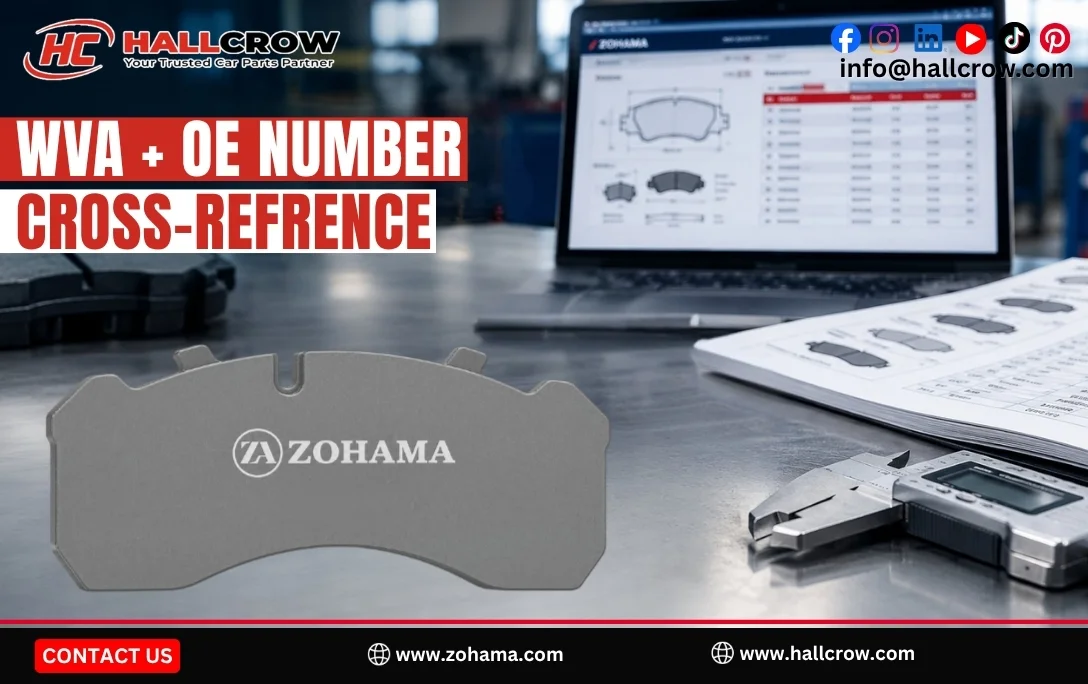
Every commercial brake pad can be identified two ways that matter to a distributor: its WVA number and its OE number. They are not competing systems, they are complementary, and a confident order usually uses both. The WVA number is an industry reference that identifies the pad itself; the OE number ties it to the vehicle manufacturer’s own part. Used together, they let you confirm you are ordering the correct physical pad for the correct vehicle, with no reliance on a model name that could mean several different pads.
HallCrow lists its commercial pads by these references on the Brake Pads by HallCrow range, which is what makes a clean cross-reference possible in the first place.
What a WVA Number Tells You
The WVA number is a standardised reference used across the brake industry to identify a specific pad set. Think of it as the pad’s own identity: it corresponds to a defined shape, size and configuration, independent of any single vehicle brand. For a distributor this is powerful, because one WVA number can cover a pad that fits several different vehicles, and matching by it means you are ordering a known physical part rather than guessing from an application list. Product pages such as the HallCrow WVA pages are built around this reference.
You can see how a single WVA reference is presented, with its fitment and specification, on a page like WVA 29090, which is the format the whole commercial pad range follows.
What an OE Number Tells You
The OE number is the vehicle manufacturer’s own part number for the pad originally fitted to the vehicle. It ties the pad to a specific make and often a specific model and axle. Where the WVA number identifies the pad, the OE number confirms the vehicle. This is the number a fleet workshop most often quotes, because it comes straight off the original part or the vehicle’s parts catalogue. A replacement pad that cross-references to that OE number is confirmed as the correct original-equipment match.
Cross-Referencing: Matching WVA to OE to Vehicle
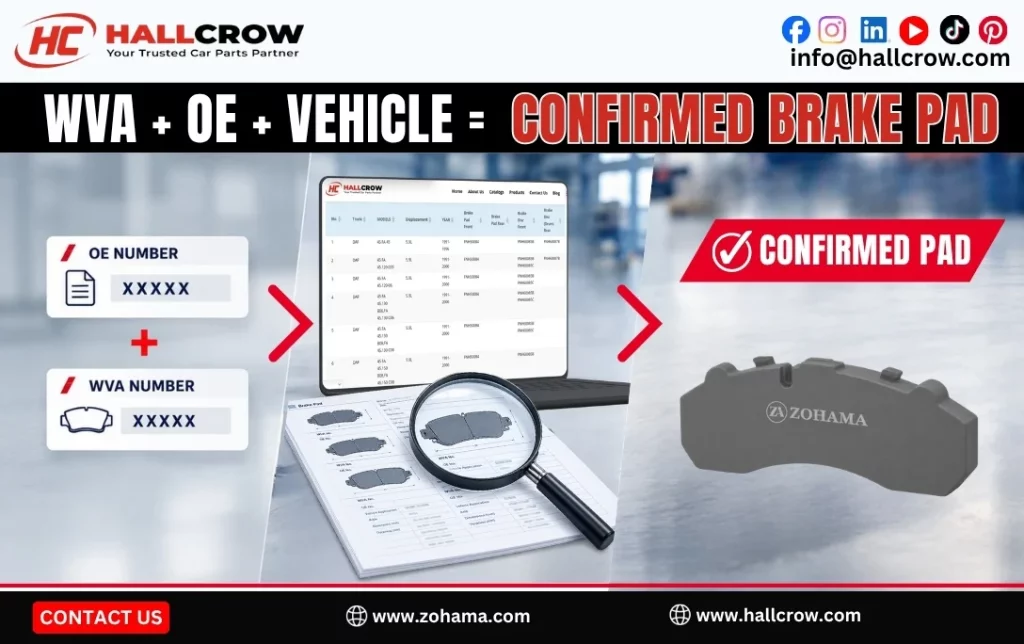
Cross-referencing is simply lining these up so all three agree: the WVA reference, the OE number, and the vehicle application. Worked as a habit it looks like this:
| You start with | You confirm against | You end with |
|---|---|---|
| An OE number from the workshop | The pad’s WVA reference | The exact replacement pad |
| A WVA number on a pad | The OE number it matches | The vehicles it correctly fits |
| A vehicle make and axle | Both WVA and OE references | A confirmed order, not a guess |
When all three agree, the order is safe. The HallCrow brake system range and the product catalogue are where those references are held for the commercial pad line.
Why Ordering by Model Name Fails on Heavy Vehicles
A model name is not a part number, and on commercial vehicles the gap between them is wide. A single truck model can run different pads across axles, model years and specification variants, so “pads for that truck” can mean three or four different sets. Order by name and you will send the wrong one often enough to lose the workshop’s trust and eat the return freight yourself. The WVA-and-OE method removes the ambiguity: you are no longer describing a vehicle, you are naming a part.
Building a Cross-Reference Habit for Your Team
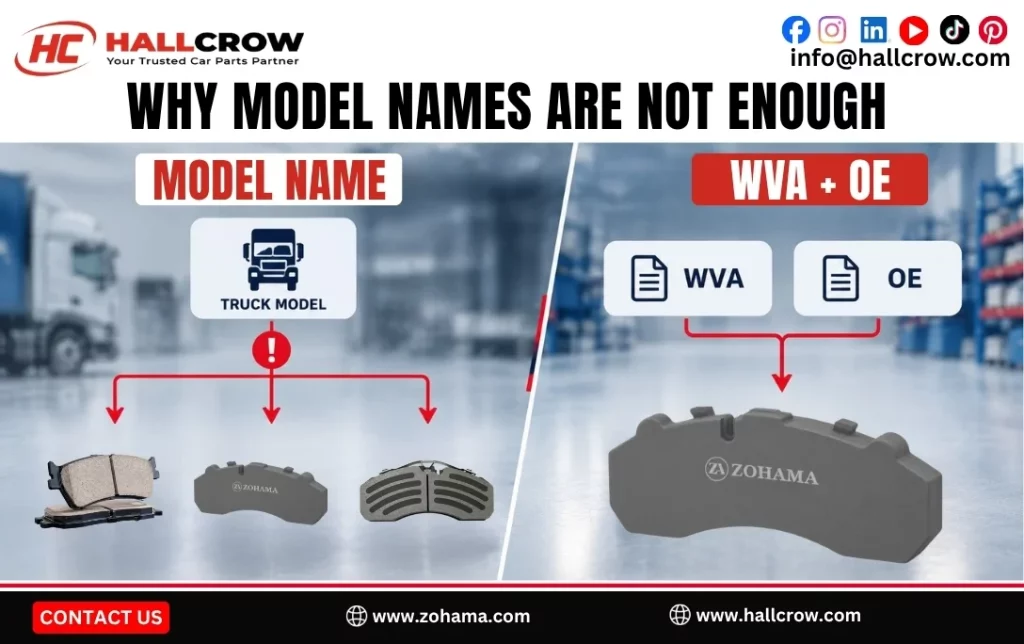
The buyers who never mis-ship are the ones who made cross-referencing a rule, not a judgement call. A simple discipline holds it in place:
- Capture both the WVA and the OE number on every enquiry, not just one.
- Confirm the vehicle make and axle alongside the numbers, so all three agree before you quote.
- Record the confirmed match in your own catalogue, so the next order for that vehicle is instant.
- Reorder against the recorded reference, not the model name, every time.
Sourcing Cross-Referenced Pads From One Manufacturer
Cross-referencing is only as good as the data behind it, which is why sourcing from a manufacturer that lists every pad by WVA and OE reference matters. It turns a research task into a lookup. HallCrow manufactures commercial brake pads listed by WVA and OE, and supplies distributors and fleets across the Middle East, Africa, Central Asia and neighbouring regions. To source cross-referenced pads for your market, or to choose a supplier that documents fitment properly, see the guide to choosing an OEM brake pad supplier or contact the HallCrow team.
Frequently Asked Questions
What is the difference between a WVA and an OE number?
The WVA number identifies the brake pad itself, its defined shape, size and configuration. The OE number is the vehicle manufacturer’s own part number, tying the pad to a specific make and often model and axle. Used together they confirm both the pad and the vehicle.
Why not just order commercial brake pads by model name?
A single truck model can take different pads across axles, model years and variants, so a model name can mean several sets. Ordering by WVA and OE number names the exact part and removes that ambiguity.
How do I cross-reference a brake pad correctly?
Line up three things until they agree: the WVA reference, the OE number, and the vehicle make and axle. When all three match, the pad is confirmed. Record the match for instant reordering.
Where do I find the WVA and OE numbers for a pad?
From a manufacturer that lists every pad by both references, as HallCrow does on its commercial pad and WVA product pages, plus the OE number quoted by the vehicle’s workshop or parts catalogue.
Conclusion
Cross-referencing by WVA and OE number is the discipline that keeps a commercial brake pad order correct, and it is the difference between a distributor workshops trust and one they stop calling. Capture both numbers, confirm the vehicle, record the match, and reorder against it. HallCrow lists its commercial pads by WVA and OE so that cross-reference is a lookup, not a research project.