As heavy vehicles move to air-disc brakes, the brake disc, or rotor, becomes a line a commercial distributor has to stock as seriously as the pads that run against it. A disc and its pads wear as a system, and a worn or poor-quality disc undermines even the best pad. For a distributor already supplying air-disc pads, adding the discs completes the braking offer and captures the full repair, not half of it. This guide explains what a heavy-duty brake disc does, why quality matters, how to match the right one, and why discs and pads belong together on the shelf.
Why Brake Discs Belong in the Range
On an air-disc brake the pad clamps against the disc, and the two wear together. A disc is replaced less often than a pad, but it is replaced, and when it is the workshop needs it at the same time as the pads. A distributor who stocks pads but not discs captures only half of each air-disc brake job and sends the customer elsewhere for the rest. Carrying both completes the repair and makes you the single call for commercial braking.
The disc side pairs directly with the HallCrow brake pads range and sits within the wider brake system range.
What a Heavy-Duty Brake Disc Does
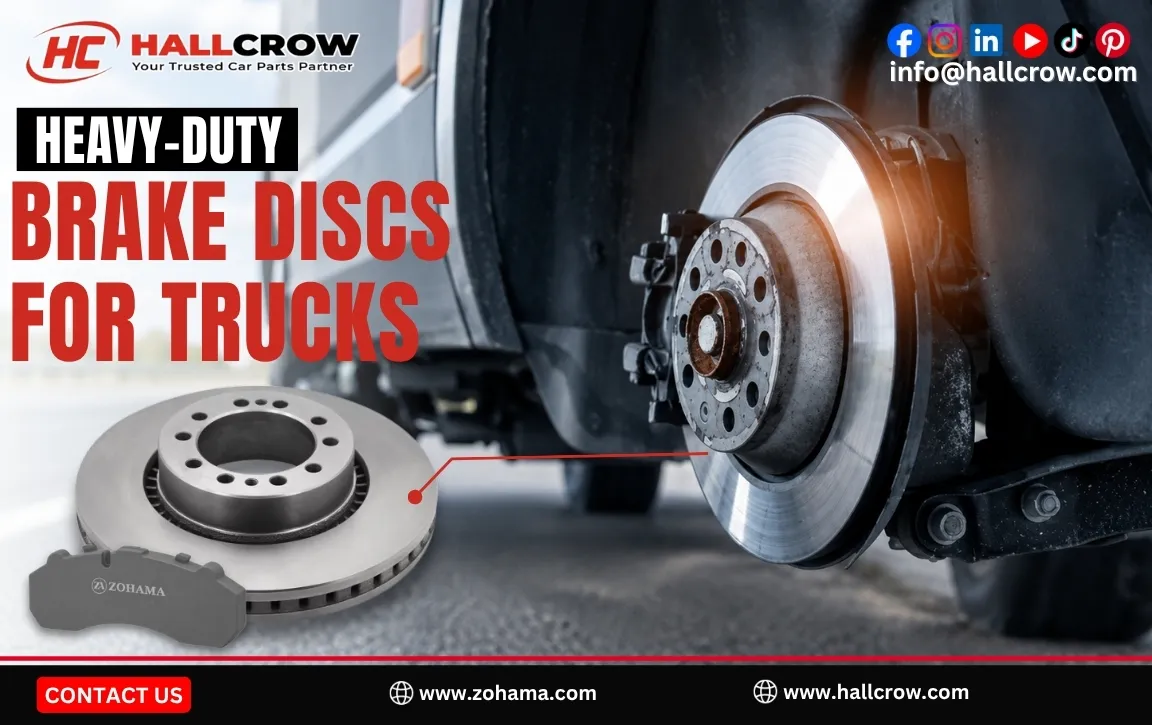
The brake disc is the rotating surface the pads clamp to turn motion into heat and slow the wheel. On a heavy vehicle it has to absorb and shed enormous amounts of heat under load without cracking, warping or wearing unevenly, which is why the metal, the casting quality and, on ventilated discs, the internal vane design all matter. A good disc dissipates heat and stays flat and true; a poor one warps, cracks or wears fast and takes the pads down with it.
Why Disc Quality Matters
A brake disc is safety-critical and heat-critical, and the quality is in the metallurgy and the manufacturing:
- Material and casting: the right grade of cast iron, free of casting flaws, to resist cracking and heat distortion.
- Heat dissipation: correct thickness and, on ventilated discs, vane design that sheds heat under sustained braking.
- Dimensional accuracy: flat, true and to the correct thickness, so it runs without judder and pairs correctly with the pad.
- Finish and protection: a clean braking surface and corrosion protection for storage and service.
Because the disc and pad perform as a system, the friction compound matters here too; the brake pad material and stopping power guide covers how the two work together.
Matching the Right Brake Disc
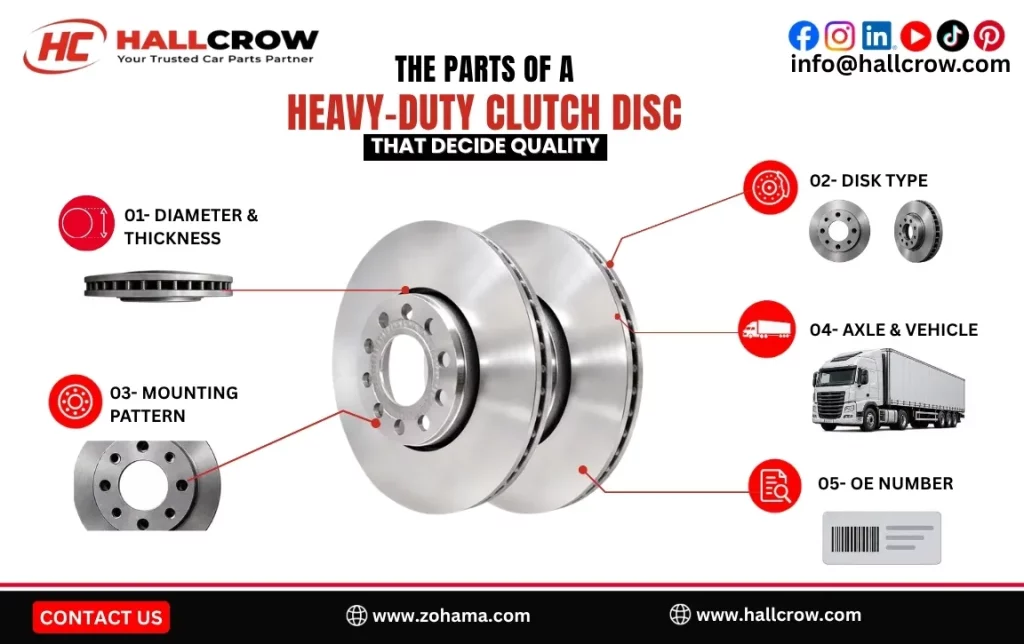
| Match on | Why it matters |
|---|---|
| Diameter and thickness | Must match the caliper and hub exactly |
| Ventilated or solid | Must suit the axle and duty |
| Mounting and bolt pattern | Must fit the hub correctly |
| Axle system / vehicle | Confirms the correct disc for the application |
| OE / reference number | The single source of truth for fit |
Stock Discs and Pads Together
The cleanest way to supply commercial braking is to stock discs and pads as the system they are, matched to the air-disc fleets in your market. It completes the repair, captures the full job, and makes a distributor the single source for commercial braking. HallCrow manufactures heavy-duty braking components and supplies distributors across the Middle East, Africa, Central Asia and neighbouring regions. To build a disc-and-pad range for your market, see the products range or contact the HallCrow team.
Frequently Asked Questions
Why should a distributor stock brake discs as well as pads?
On an air-disc brake the pad and disc wear as a system, and when the disc is replaced the workshop needs it with the pads. Stocking both captures the full repair instead of sending the customer elsewhere.
What makes a quality heavy-duty brake disc?
The right grade of cast iron free of casting flaws, correct thickness and vane design for heat dissipation, dimensional accuracy so it runs true, and a clean, protected braking surface.
How do I match the right brake disc?
Match the diameter and thickness, ventilated or solid type, mounting and bolt pattern, and axle or vehicle, confirmed against the OE or reference number so it fits the caliper and hub exactly.
Can I order discs and pads together in bulk?
Yes. Both are supplied factory-direct to distributors and fleets, with pricing, lead time and MOQ confirmed on request and samples available before a bulk order.
Conclusion
Brake discs complete the commercial braking offer: the pad and disc wear as a system, and a distributor who stocks both captures the full air-disc repair. Stock discs built for heat and matched by specification alongside the pads, and you own commercial braking in your market. HallCrow manufactures heavy-duty braking components for distributors across its served markets.