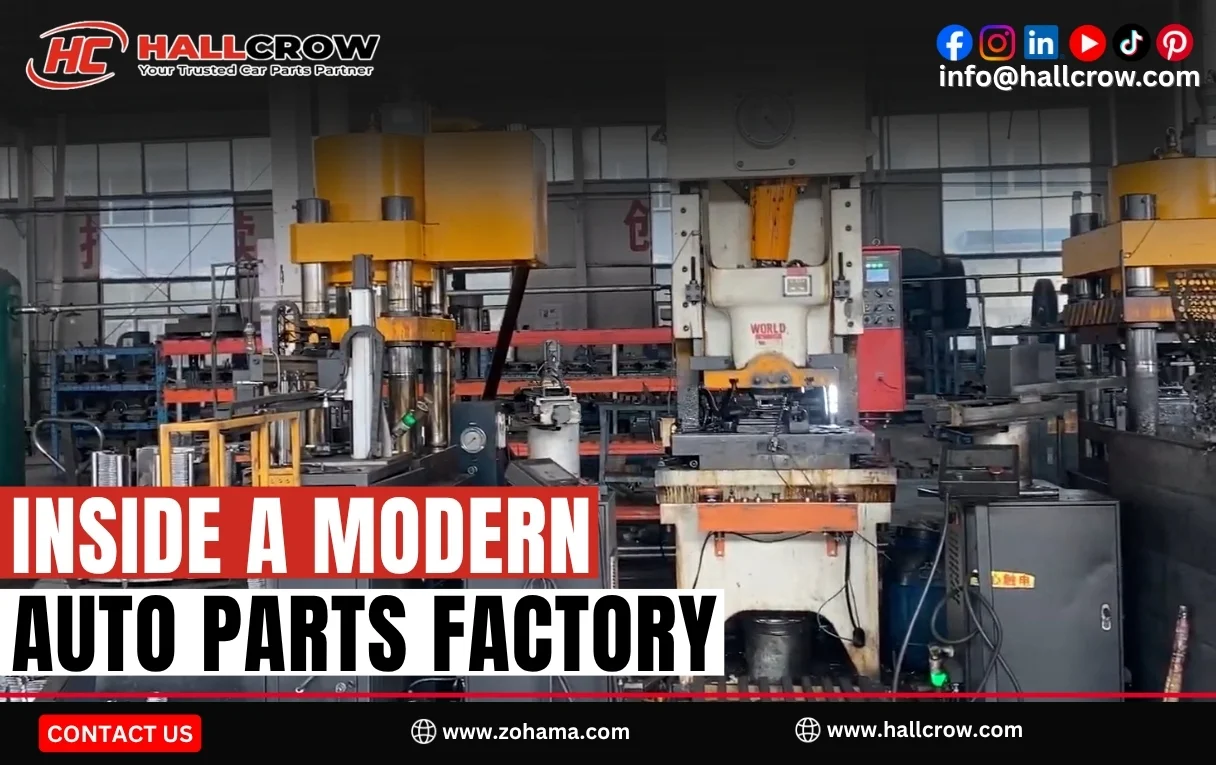
When a distributor buys a heavy-vehicle part, they are not really buying the finished object on the shelf, they are buying the process that made it. Two pads that look identical can behave completely differently under a loaded truck, and the difference was decided long before either reached a box, in the material, the forming and the testing. This article walks through how a modern auto parts factory turns raw material into a finished, certified part, and why understanding that process is the clearest way for a buyer to tell a real manufacturer from a trader.
Why the Process Is What You Are Buying
A part is the sum of the decisions made while it was produced: which materials, mixed to what formulation, formed under what conditions, and proven against what tests. A trader cannot speak to any of that because they did not make the part; a manufacturer can, because every stage happened under their control. For safety-critical heavy-vehicle parts, that control is the product. It is why a distributor sourcing from the factory can stand behind a batch, and one sourcing from a middleman can only pass along a complaint.
This is the foundation of the HallCrow Automotive manufacturer profile: production controlled in-house rather than bought in and relabelled.
Stage 1: Material Selection
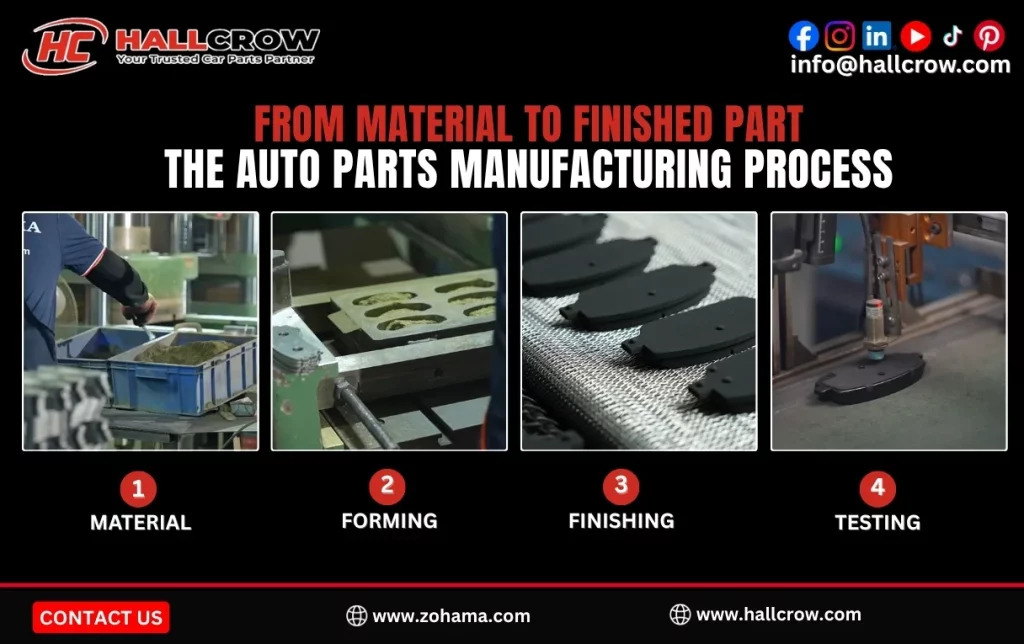
Everything starts with the raw material, and for a heavy-vehicle part the material has to be chosen for load, heat and life, not for the lowest cost. For a brake pad that means the friction formulation and the backing plate steel; for a suspension part, the metal grade and its heat treatment; for a filter, the media. A manufacturer specifies and sources these to a standard and can tell you exactly what goes in. A commodity producer uses whatever keeps the price down, which is where batch-to-batch inconsistency begins.
Stage 2: Forming and Assembly
Next the material is formed into the part under controlled conditions. For a brake pad this is mixing the compound, pressing it to the backing plate under heat and pressure, and curing it so the friction material bonds properly and performs consistently. Other systems have their own forming and assembly steps, but the principle is the same: controlled conditions produce a consistent part, and uncontrolled ones produce a lottery. The shims, hardware and sensors are fitted here too, so the part is complete and correct for its application.
Stage 3: Finishing and Marking
A finished part is cleaned, coated for corrosion protection, and marked with its reference and compliance codes. This stage is not cosmetic. The edge code and markings are how a distributor and a workshop confirm they have the exact part, and the corrosion protection is what keeps it sound in storage and in service. A clean, correctly marked part is a sign of a controlled line; a vague, unmarked one is a warning.
Stage 4: Testing and Quality Control
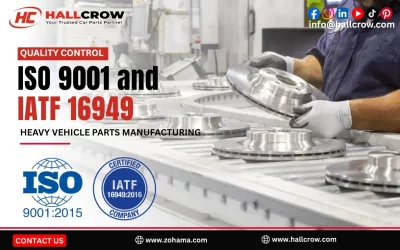
The stage that most separates a manufacturer from a trader is testing. A real factory runs its parts against recognised standards and keeps the data: ISO 9001 and IATF 16949 quality systems governing the process, ECE R90 approval for braking parts, and part-appropriate tests for friction, shear and wear. Testing is not a sample shown once; it is built into the line so every batch is held to the same standard.
| Stage | What is controlled | What the buyer gets |
|---|---|---|
| Material | Grade, formulation, sourcing | Consistency starts at the input |
| Forming | Pressing, curing, assembly | A part made the same way every time |
| Finishing | Coating, marking, edge codes | A correct, identifiable, protected part |
| Testing | ISO, IATF, ECE R90, test data | Proof the part performs, batch to batch |
The brake system range shows how this process produces an OE-matched braking part, and the wider products range applies the same discipline across every system.
What This Means for a Distributor
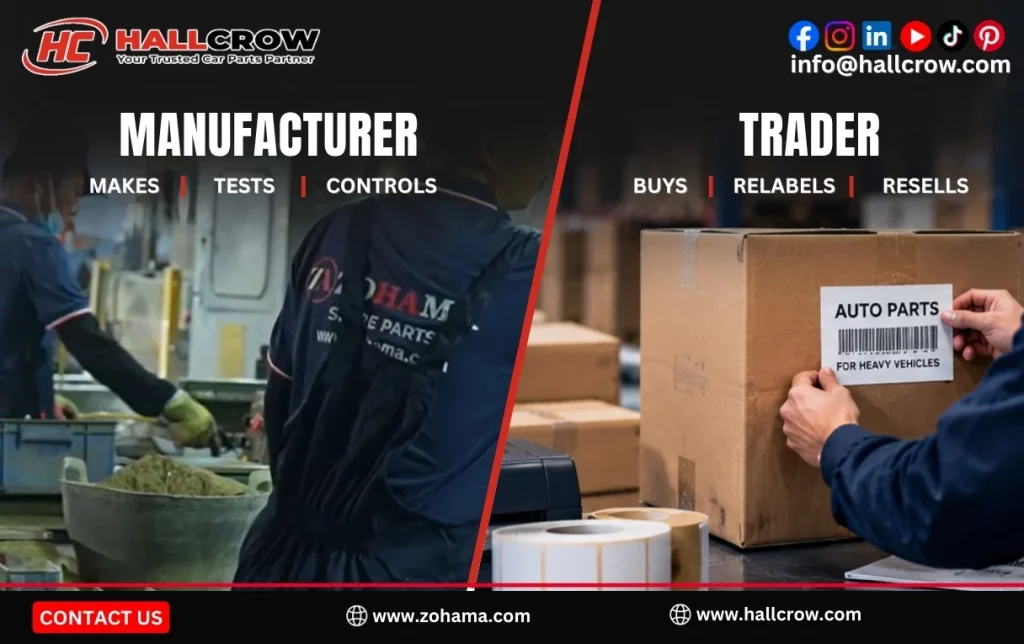
Understanding the process gives a buyer a practical test. Ask a supplier how a part is formulated, formed and tested. A manufacturer answers in specifics, material grades, forming conditions, test data, because they control each stage. A trader deflects, because they do not. The process is both the product you are buying and the clearest signal of who you are buying from.
Source From the Factory
A part is the process that made it, and a distributor who sources from the factory buys that process, not just the box. HallCrow manufactures heavy-vehicle parts in-house, from material to finished, certified part, and supplies distributors across the Middle East, Africa, Central Asia and neighbouring regions. To source factory-made parts for your market, contact the HallCrow team, or read more on the About HallCrow page.
Frequently Asked Questions
Why does the manufacturing process matter to a buyer?
Because a part is the sum of how it was made. Two parts can look identical but behave differently under load; the difference was set in the material, forming and testing, all controlled only by a real manufacturer.
How can I tell a manufacturer from a trader?
Ask how a part is formulated, formed and tested. A manufacturer answers in specifics because they control each stage; a trader deflects because they only buy the part in and relabel it.
What standards should the process meet?
ISO 9001 and IATF 16949 quality systems over the process, ECE R90 for braking parts, and part-appropriate testing for friction, shear and wear, with the data kept and available on request.
Why is testing the key stage?
Testing proves the part performs and that every batch meets the same standard. A manufacturer builds it into the line; a trader can only show a sample, not guarantee the batch behind it.
Conclusion
From material to finished part, every stage of manufacturing decides how a heavy-vehicle part will perform, and only a real manufacturer controls them all. For a distributor, buying the process, not just the part, is what makes a supplier dependable. HallCrow controls each stage in-house and supplies certified parts to distributors across its served markets.