Walk through any mixed truck and bus fleet and you will find both braking systems still working side by side. Older trucks and many trailer axles run drum brakes; newer prime movers and buses increasingly run air-disc brakes; plenty of vehicles run one on the front axle and the other on the rear. For a parts distributor that is not a technical footnote, it is a stocking decision. Get it right and you carry the friction parts your market’s fleets actually need. Get it wrong and you are sitting on the wrong consumables while a customer waits. This guide explains how the two systems differ on heavy vehicles and what that means for the range you build.
Two Braking Systems Still on the Road
Light vehicles moved to discs almost everywhere years ago. Heavy vehicles did not, and the reason is history and economics rather than one system simply being better. Drum brakes are proven, cheap to maintain and handle the parking-brake and load-holding job well, so they stayed on trailers and older trucks for decades. Air-disc brakes came later to the heavy segment and are now spreading fast on new equipment because of how they behave under sustained heavy braking. The result is a market where both are in service at once, and a distributor has to supply both.
HallCrow manufactures the friction and brake-system parts for both, covered across the heavy-vehicle brake system range, so a distributor can source drum and disc consumables from one factory rather than splitting the range across suppliers.
How Drum Brakes Work on Trucks and Buses
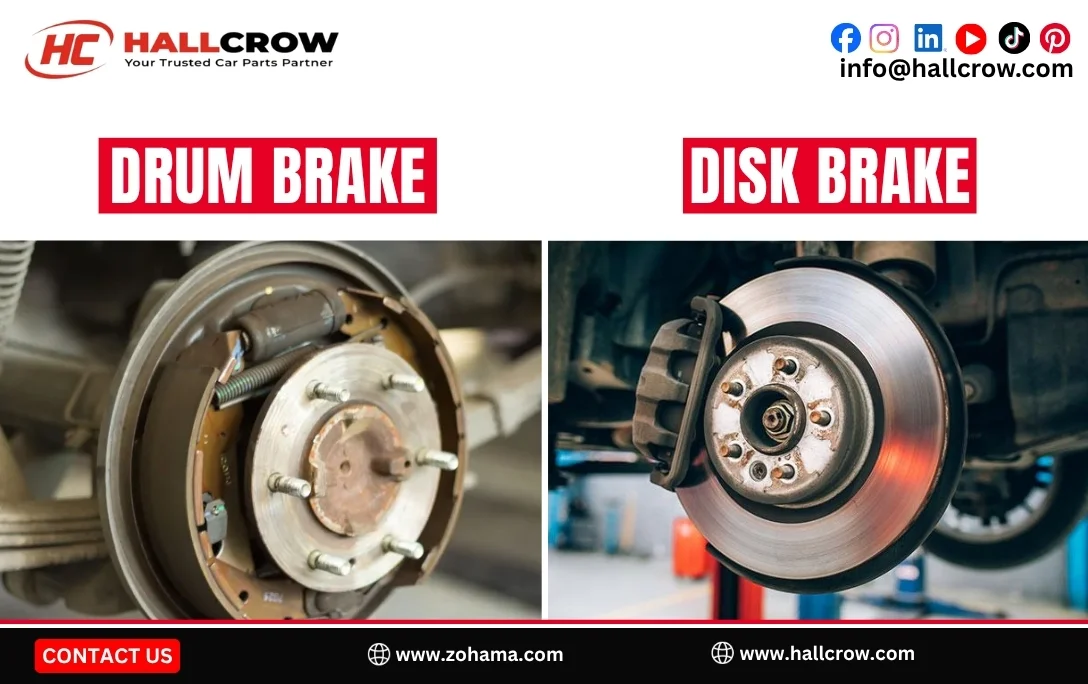
A drum brake uses a rotating drum and a pair of curved brake shoes that press outward against the inside of the drum to create friction. On heavy vehicles the system is usually actuated by air pressure through an S-cam or wedge mechanism. Its strengths are why it survives: it is mechanically simple, it holds a loaded vehicle well as a parking brake, the friction surface is enclosed and protected from road grit, and the parts are inexpensive to replace. Its weakness is heat. Because the drum encloses the friction surface, it sheds heat slowly, so under long, heavy braking a drum can build up enough heat to fade before a disc would.
How Disc Brakes Work on Commercial Vehicles
A disc brake clamps a flat rotor between two brake pads using a caliper. On modern trucks and buses this is typically an air-disc brake, where air pressure drives the clamping force. The advantages line up against the drum’s weakness: the rotor is open to the air so it sheds heat quickly, which resists fade under sustained load; braking is more responsive and easier to balance across axles; and pad changes are generally quicker to service. The trade-offs are a higher parts cost and friction components that are more exposed to road contamination than an enclosed drum.
The friction compound matters more on discs under heavy load, which is why the brake pad material and stopping power guide is worth reading alongside this one, and why the HallCrow brake pads range is specified by application rather than sold as one generic pad.
Disc vs Drum: A Side-by-Side for Fleet Buyers
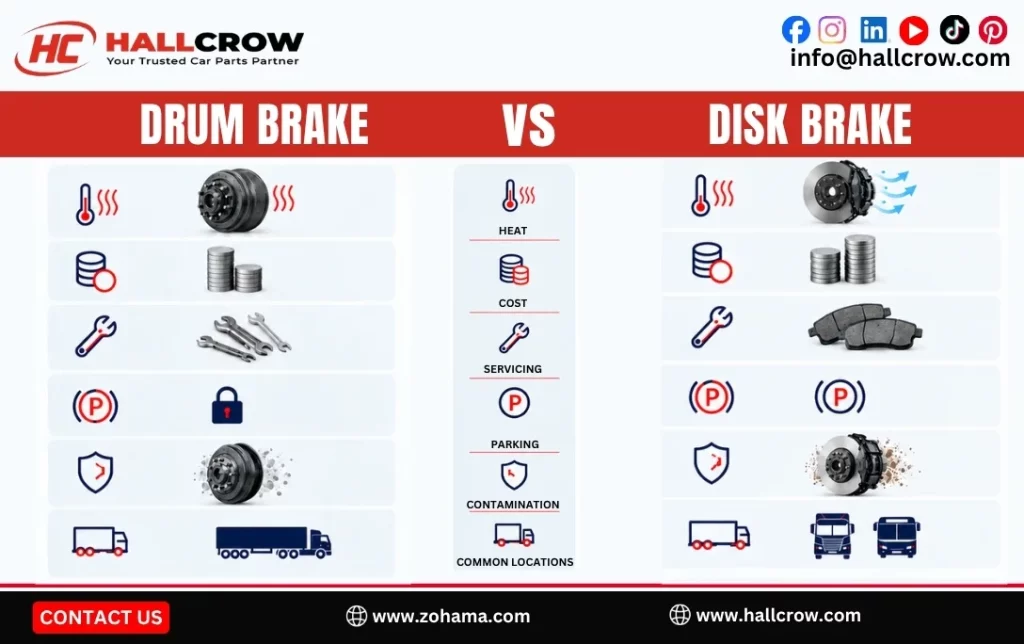
| Factor | Drum brakes | Disc brakes |
|---|---|---|
| Heat handling | Slower to shed heat; can fade under long loads | Open rotor sheds heat fast; resists fade |
| Parts cost | Lower per axle | Higher per axle |
| Servicing | More steps to inspect and adjust | Faster pad changes, easier inspection |
| Parking / load hold | Strong; well suited to holding | Handled, often with a separate mechanism |
| Contamination | Enclosed, protected from grit | More exposed to road contamination |
| Where you find it | Trailers, older trucks, many rear axles | Newer trucks and buses, front axles |
Air-Disc Brakes: Where the Market Is Heading
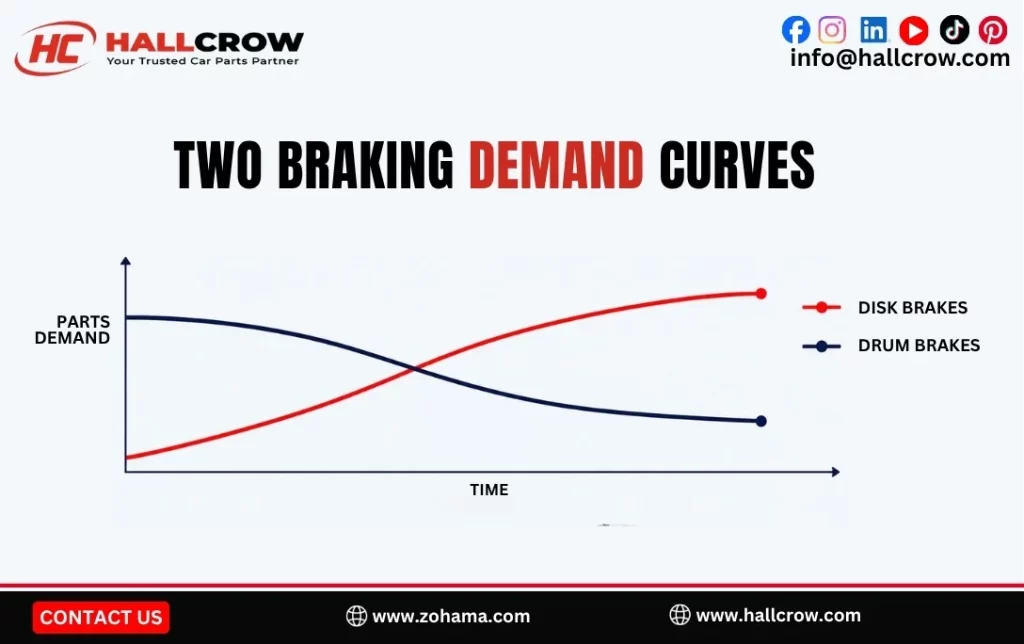
The clear direction of travel on new heavy vehicles is toward air-disc brakes, especially on prime movers and buses where sustained braking performance and quicker servicing carry real operating value. That does not mean drums are disappearing. Trailers, vocational trucks and a large installed base of older vehicles will run drums for years yet, and in many markets across the Middle East, Africa and Central Asia the average fleet age keeps drum demand strong well after the new-truck market has shifted. A distributor reads this as two demand curves running at once: a growing disc curve and a long, steady drum tail.
What This Means for the Parts You Stock
The practical takeaway is that a heavy-vehicle parts business in these markets stocks both, and weights the range to the fleets it actually serves. A few principles help:
- Match your stock to your market’s fleet age, not to what the newest trucks use, and keep drum consumables deep where older fleets dominate.
- Carry disc pads for the growing prime-mover and bus segment, specified by application so you quote the right pad, not a generic one.
- Expect mixed vehicles, disc front and drum rear, and stock both consumables for the same truck.
- Source both from one manufacturer so batch quality and documentation are consistent across the range.
HallCrow’s products range covers the full commercial braking spread from one factory, which is what lets a distributor keep both curves supplied without juggling suppliers.
Sourcing Brake Parts for Mixed Fleets
Supplying a mixed fleet well comes down to range, consistency and fitment accuracy: the right disc and drum parts, made to a consistent standard batch to batch, and matched to the vehicle so your customer is not guessing. HallCrow manufactures heavy-vehicle brake friction and system parts to ECE R90, and supplies distributors and fleet operators across the Middle East, Africa, Central Asia and neighbouring regions. To build a disc-and-drum range for your market, contact the HallCrow team with your fleet profile.
Frequently Asked Questions
Are commercial vehicles moving from drum to disc brakes?
New trucks and buses are increasingly fitted with air-disc brakes for better heat handling and faster servicing, but drums remain widespread on trailers, vocational trucks and older fleets, so both stay in demand.
Why do trailers still use drum brakes?
Drums are lower cost, mechanically simple, hold a loaded vehicle well and enclose the friction surface against road grit, which suits trailer duty and keeps replacement parts inexpensive.
Which system handles heavy loads better?
Under long, sustained braking, disc brakes shed heat faster through the open rotor and resist fade better than drums, which is a key reason new prime movers and buses favour air-disc systems.
Should a distributor stock both disc and drum parts?
Yes. Most heavy-vehicle markets run a mix of both, and many single vehicles combine disc and drum axles, so a distributor covers demand by carrying both and weighting stock to the local fleet age.
Conclusion
Disc and drum brakes are not a question of which is better but of which is in service, and on heavy vehicles the answer is both. Discs are growing on new equipment while drums run on for years across trailers and older fleets. A distributor who understands the split and sources both consumables from one manufacturer keeps every fleet in the market supplied. HallCrow makes the friction and brake-system parts for both.