Sourcing heavy-vehicle parts from China is one of the best moves a commercial parts distributor can make, and one of the easiest to get wrong. Done well, it gives you factory-direct pricing, broad coverage and dependable supply. Done badly, it gives you returns, wrong fitments and a supplier who vanishes after the first order. The difference is process. This is the step-by-step path experienced buyers follow, from deciding what to source to getting it shipped.
For background on why China leads and what to make sure of, pair this with our guide on choosing a manufacturer. For the range HallCrow makes, see our products page.
Step 1: Define Your Range Before You Shop
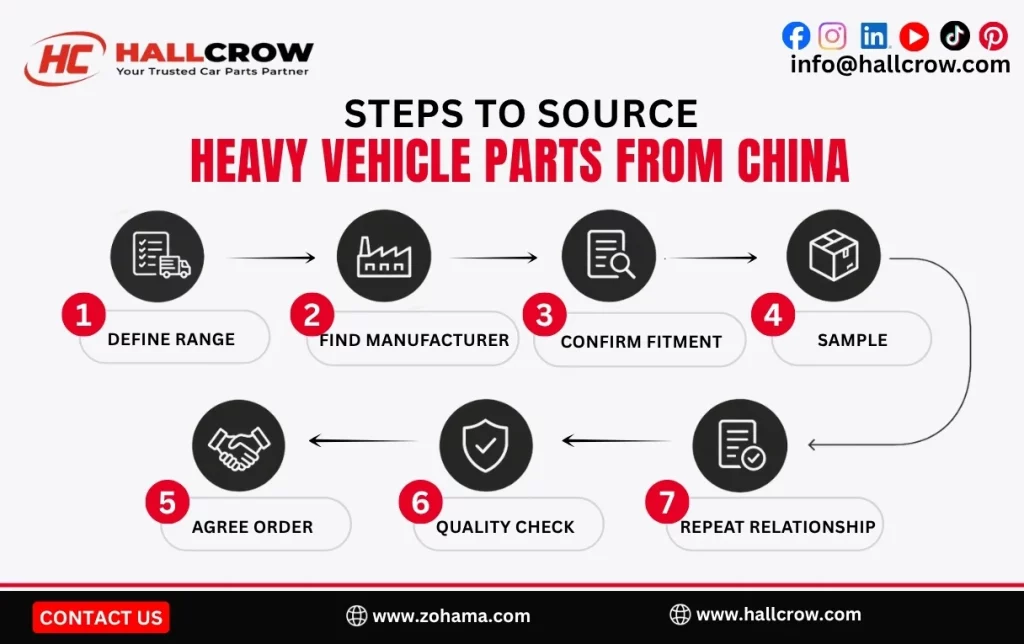
Start with your market, not a supplier’s catalogue. Which trucks, buses and systems does your market actually run, and which references are the fast movers? Deciding this first stops you buying a broad, unfocused range and lets you brief suppliers precisely. Our heavy vehicle auto parts manufacturer in China page shows the kind of coverage a single manufacturer can offer across systems.
Step 2: Find a Manufacturer, Not a Trader
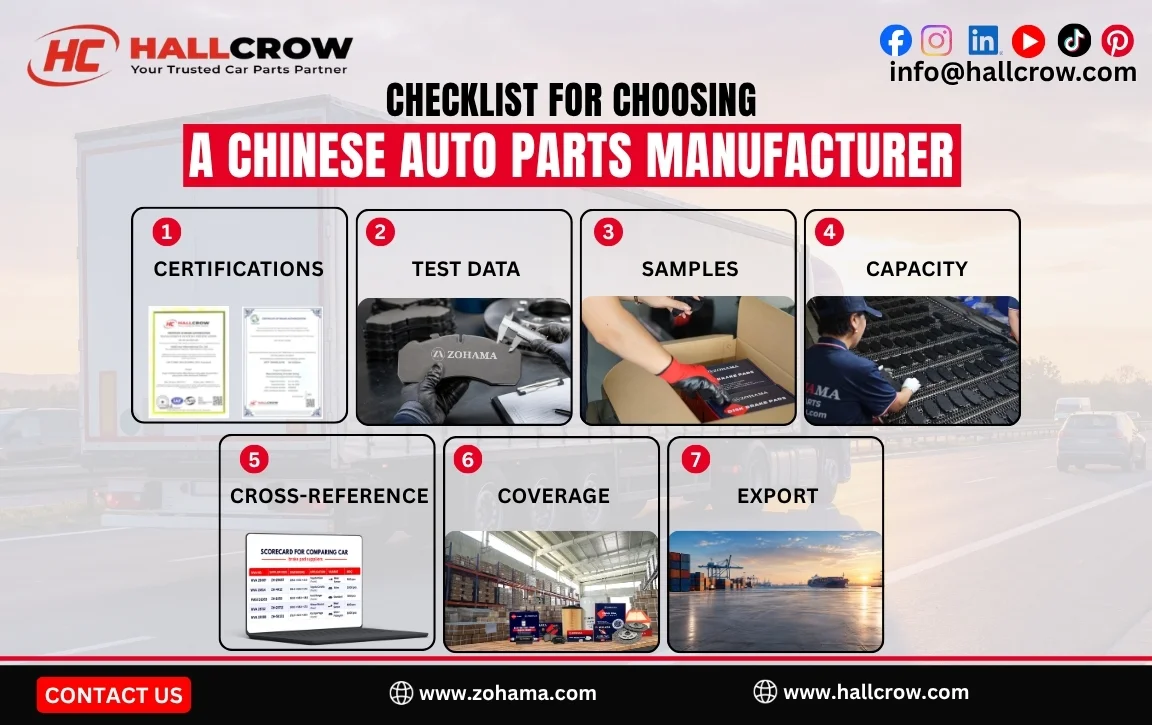
The single most important step. A manufacturer makes the parts and controls quality; a trader resells whatever a factory shipped. Verify certifications in the company’s own name, ask for test data, and confirm where the parts are actually made. Sourcing across systems from one manufacturer also means one quality standard and one point of contact instead of juggling many suppliers.
Step 3: Confirm Fitment by Number
Heavy-vehicle parts are matched by WVA and OE number, not by description, so agree the exact references before anything else. This is where a good supplier proves useful: clear cross-reference data lets you confirm fitment and build it into your own catalogue. See how this works on our brake pads by HallCrow range, where each reference carries its WVA number.
Step 4: Sample Before You Commit
Never place a first bulk order on an unproven reference. Request a sample, check it against the specification, and keep it as your reference standard. On safety-critical heavy-vehicle parts, this small step prevents a large, expensive mistake, and a serious manufacturer will expect and welcome it.
Step 5: Agree the Order, Packaging and Terms
Once samples pass, confirm the bulk order: quantities, packaging, labelling and lead time. Agree how quality is checked before shipment, and what documentation your destination market needs. A supplier with real export experience, as covered on our brake system range, will know the paperwork your customs office wants before you ask.
Step 6: Quality Check Before It Ships
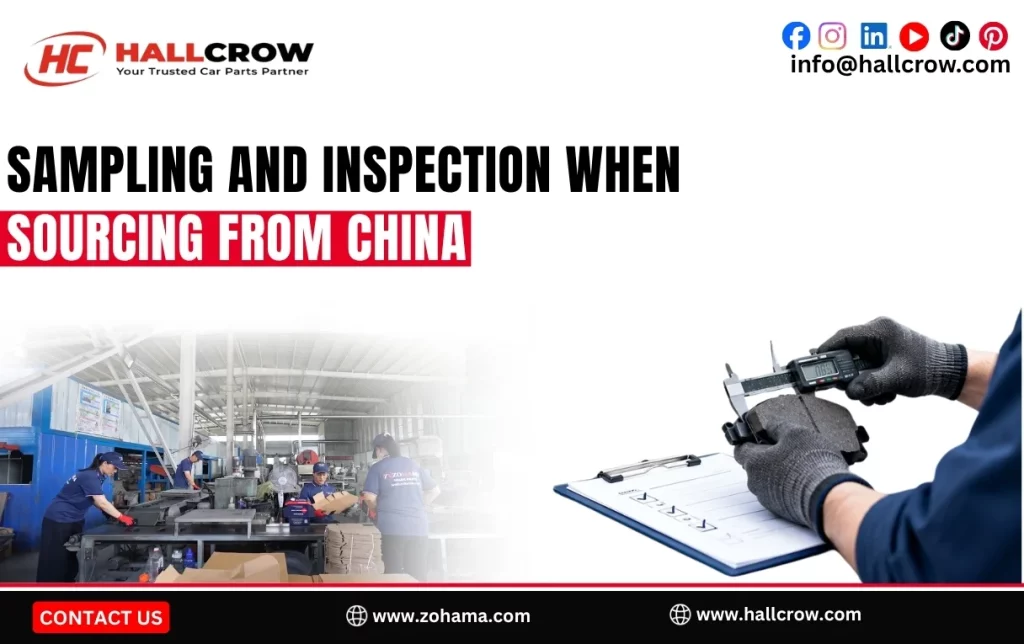
Confirm the finished batch matches your approved sample before it leaves the factory, not after it lands. For larger orders, an independent inspection at the factory adds protection and gives you leverage while you still have it. This is the step that turns a good supplier into a dependable one, and it should be routine, not a special request.
Step 7: Build a Repeat Relationship
The goal is not one good order; it is a supply partner you can grow with. Once a supplier has proven quality, capacity and reliability, concentrate your volume with them and set a reorder rhythm. That is where factory-direct sourcing really pays off. To start that relationship, explore our products range or reach us through contact us.
Frequently Asked Questions
What is the first step in sourcing heavy-vehicle parts from China?
Define your range first, based on the trucks, buses and systems your market runs and the fast-moving references, so you can brief suppliers precisely instead of buying an unfocused range.
How do I avoid buying from a trader instead of a manufacturer?
Verify certifications in the company’s own name, ask for test data, and confirm where the parts are actually made. A manufacturer controls quality; a trader resells whatever a factory shipped.
Do I need to sample before a bulk order?
Yes, always, for a new reference. Sample, check against the specification, and keep it as your reference standard, especially on safety-critical heavy-vehicle parts.
How is fitment confirmed on heavy-vehicle parts?
By WVA and OE number, not by description. Agree the exact references up front and use the supplier’s cross-reference data to confirm fitment and build your own catalogue.
Conclusion
Sourcing heavy-vehicle parts from China rewards process over luck. Define your range, find a real manufacturer, confirm fitment by number, sample before you commit, agree the order and its checks, verify quality before it ships, and build a repeat relationship. Follow those steps and China’s scale becomes a dependable advantage for your business rather than a gamble.