Two decades ago, sourcing heavy-vehicle parts from China meant accepting a trade-off: low price for uncertain quality. Today that trade-off has largely collapsed. China now manufactures a large share of the world’s commercial-vehicle parts, and the best factories compete on certification and consistency, not just cost. For an importer or distributor deciding where to source truck and bus parts, understanding how that shift happened is not history for its own sake, it explains why the country is now a serious sourcing decision and how to pick the right factory inside a very large market.
From Assembly to Authority: China’s Rise in Heavy-Vehicle Parts
China’s move into heavy-vehicle parts followed the growth of its own commercial-vehicle industry. As domestic truck and bus production scaled, an enormous parts supply chain grew around it: friction materials, filtration, suspension, transmission and engine components, all made at volume for a home market that was itself becoming one of the largest in the world. That domestic scale is the root of the export strength. Factories built to supply a huge internal demand could also supply the world, and did.
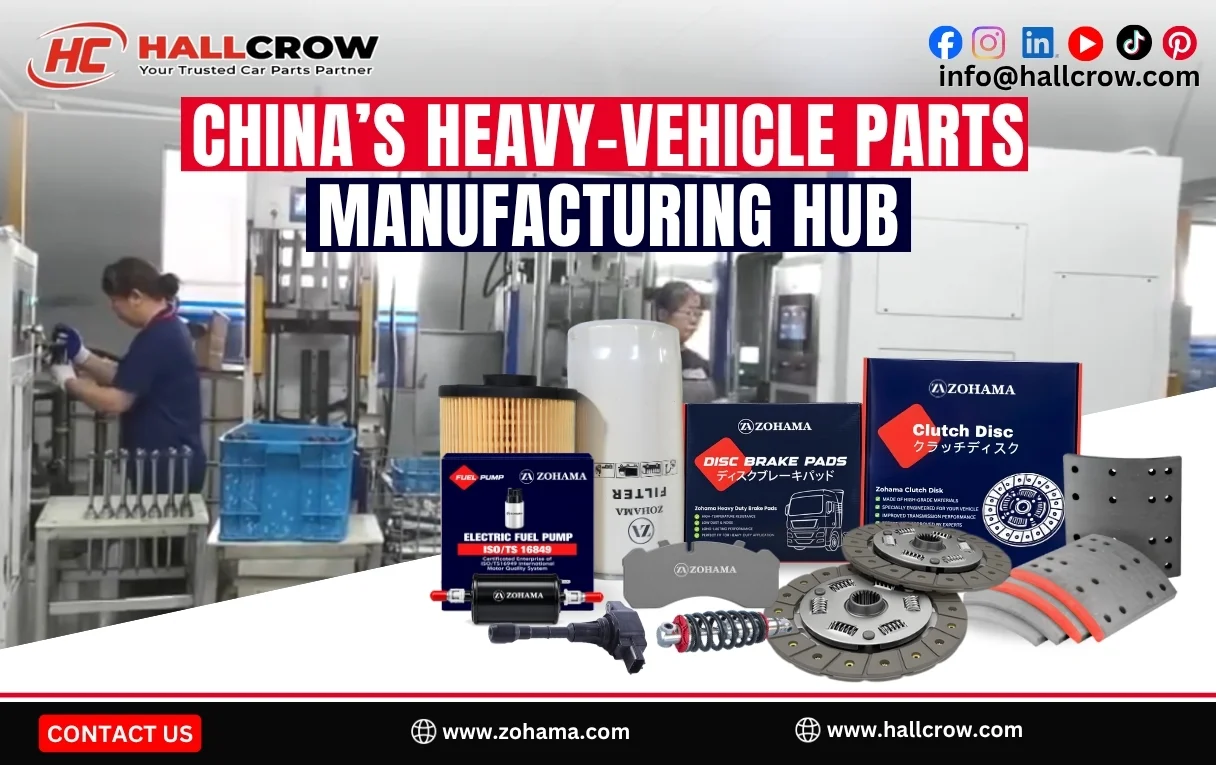
HallCrow sits inside that supply base as a heavy-vehicle parts manufacturer in China, making commercial-vehicle parts at the scale the domestic industry created and exporting them to distributors abroad.
What Built the Manufacturing Base
Three forces turned China into a heavy-vehicle parts hub, and they reinforce each other:
- Scale: a domestic commercial-vehicle market large enough to support factories running at full volume, which lowers unit cost.
- Supply-chain density: raw materials, components and finishing all available close together, so production is fast and integrated.
- Specialisation: factories that focus on one system, such as braking or filtration, and get very good at it rather than making everything.
Why Heavy-Vehicle Parts Specifically
Passenger-car parts get most of the attention, but heavy-vehicle parts became a particular strength for a practical reason: commercial vehicles are consumable-heavy and safety-critical, so the demand is deep and repeating. Trucks and buses wear brakes, filters, clutches and suspension parts on a hard cycle, and fleets replace them constantly. A manufacturing base that could serve that steady, high-volume replacement demand at home was well placed to serve the same demand in export markets where the vehicle mix is similar.
The Quality Shift: From Cheap to Certified
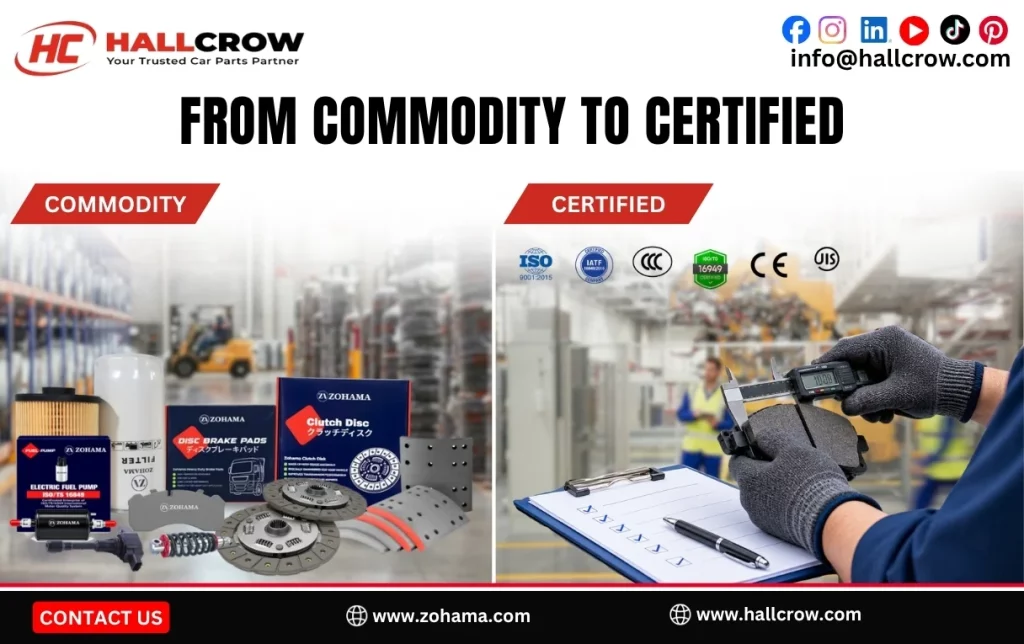
The most important change is the one buyers are slowest to update. The old reputation, cheap and inconsistent, described a market stage that the leading factories have moved past. Serious manufacturers now run to ISO 9001 and IATF 16949 quality systems and test braking parts to ECE R90, because their export customers demand it and their domestic OE customers demanded it first. The commodity end of the market still exists, which is exactly why vetting the specific factory matters, but the ceiling is now certified, OE-grade production rather than the lowest common denominator.
This is why the distinction between a top auto parts manufacturer in China and a trading company matters more than ever: the quality range is wide, and the buyer’s job is to source from the certified end of it.
What This Means for Importers in the Region
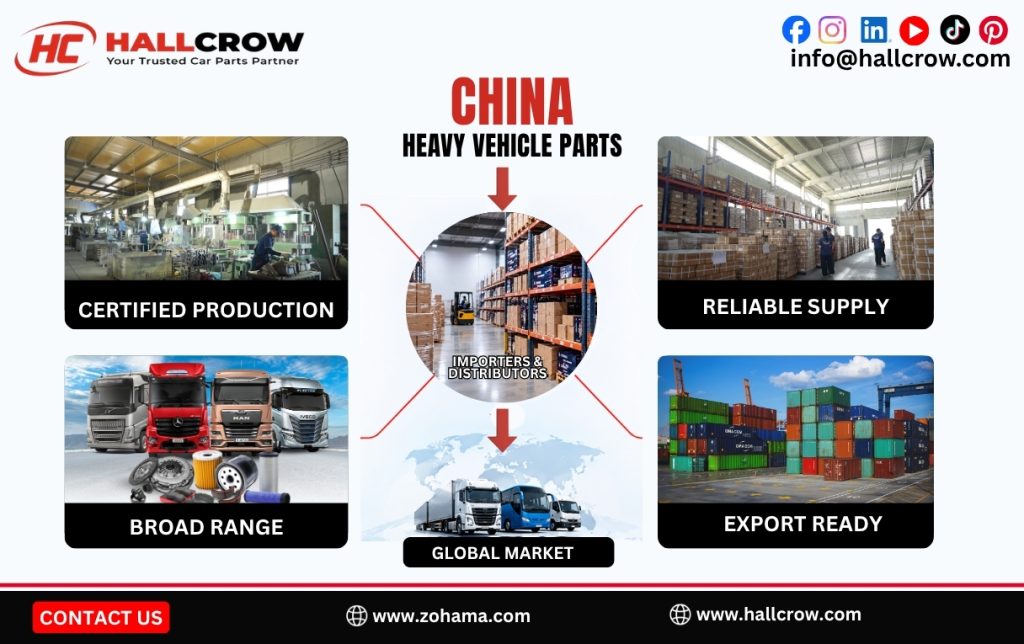
For importers across the Middle East, Africa and Central Asia, where fleets run a mix of Chinese, Japanese and European commercial vehicles, the implications are direct:
| What China offers now | What it means for your business |
|---|---|
| Certified, OE-grade production | You can source quality without paying European prices |
| Deep, repeating consumable supply | A reliable pipeline for brakes, filters and wear parts |
| Broad system coverage | A full commercial range from fewer suppliers |
| Export-ready documentation | Cleaner customs and faster clearance in your market |
Choosing the Right Partner in a Big Market
The size of the market is the opportunity and the risk. Hundreds of factories means the right partner is in there, but so are the commodity resellers. The buyer’s task is to filter for a real manufacturer with certification, specific product data, sampling on new lines and export experience in the region, and to build a relationship with one rather than juggle many. Sourcing a full commercial range from a single certified manufacturer is what turns China’s scale into an advantage for your business instead of a sourcing headache.
The HallCrow Automotive manufacturer profile sets out that production side, and the products range shows the full commercial-vehicle spread available from one source.
Source From the Certified End of the Market
China’s rise into a heavy-vehicle parts hub is real, and so is the quality shift behind it. The opportunity for a distributor is to source from the certified, manufacturer-direct end of that market and build a supply line on it. HallCrow manufactures heavy-vehicle parts in China to certified standards and supplies distributors across the Middle East, Africa, Central Asia and neighbouring regions. To build a range for your market, contact the HallCrow team.
Frequently Asked Questions
Why is China the global hub for heavy-vehicle parts?
A very large domestic commercial-vehicle market built factories at scale, dense supply chains made production fast and integrated, and specialised factories became expert in single systems, together making China a leading exporter of truck and bus parts.
Are Chinese heavy-vehicle parts still low quality?
The leading factories now run ISO 9001 and IATF 16949 systems and test braking parts to ECE R90. A commodity end still exists, which is why vetting the specific manufacturer matters, but certified OE-grade production is widely available.
What should importers in the Middle East and Africa look for?
Certified, OE-grade production, deep consumable supply, broad system coverage from fewer suppliers, and export-ready documentation for cleaner customs clearance in the destination market.
How do I choose the right factory in such a large market?
Filter for a real manufacturer with certifications, specific product data, sampling on new lines and export experience in your region, then build a relationship with one certified source rather than juggling many resellers.
Conclusion
China became the world’s heavy-vehicle parts hub through scale, supply-chain density and specialisation, and the quality has shifted from cheap to certified at the leading factories. For importers, the winning move is to source from that certified, manufacturer-direct end of the market. HallCrow is one such manufacturer, supplying certified commercial-vehicle parts to distributors across its served regions.