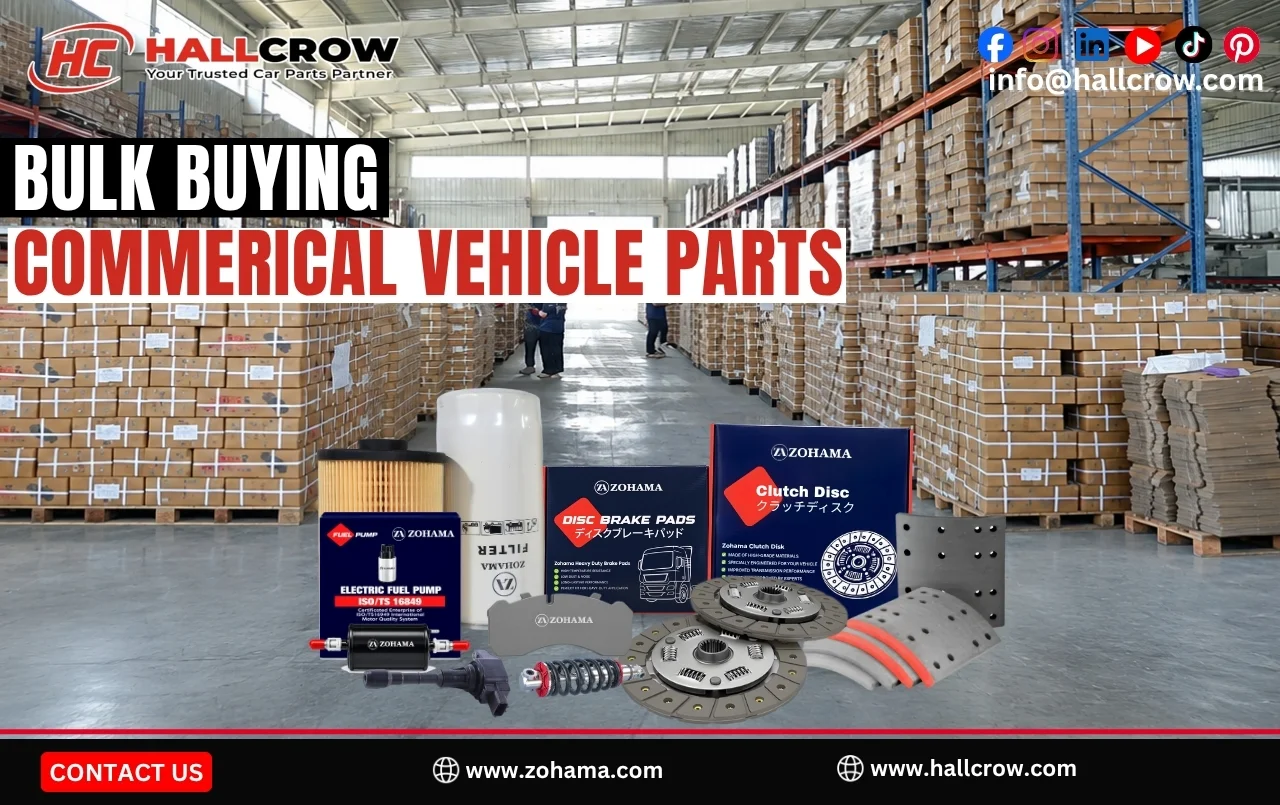
Bulk buying is how a commercial parts distributor protects margin and keeps fleets supplied, but a truck-parts order is not a scaled-up car-parts order. The unit values are higher, the fitment range is wider, the parts are safety-critical, and a mistake ordered in volume ties up serious capital. Getting bulk buying right is less about chasing the lowest price and more about planning the range, controlling quality and setting a rhythm you can repeat. This guide sets out how experienced distributors do it.
Why Bulk Buying Commercial Parts Is Different
Three things separate a commercial-parts bulk order from a passenger-car one. The unit values are higher, so a wrong call costs more per line. The fitment range is wider, because a mixed fleet of trucks, buses and trailers spans many makes, axles and systems. And the parts are safety-critical, so quality failures are not just returns, they are liabilities. Together these mean a commercial bulk order rewards planning and punishes guesswork more sharply than a car-parts order ever does.
Sourcing across systems from one manufacturer helps manage all three. HallCrow’s products range covers the full commercial-vehicle spread, so a distributor can plan a bulk order across braking, filtration, suspension and more from a single source.
What Multiplies in a Bulk Order
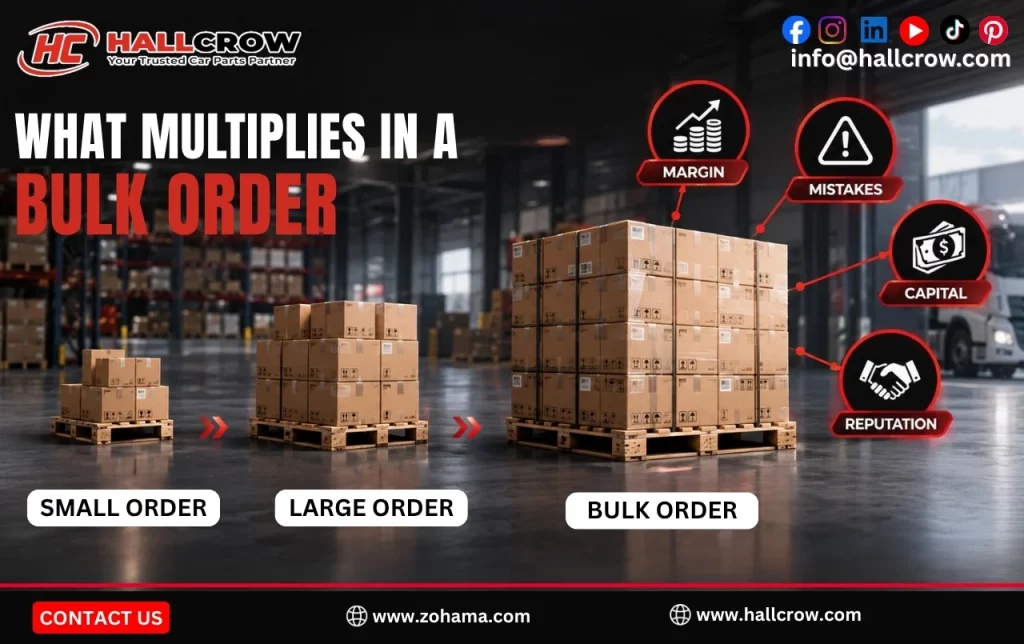
The defining feature of bulk is multiplication, of both the upside and the risk:
- Margin multiplies: factory-direct pricing across a large order is where a distributor’s profit is made.
- Mistakes multiply: a wrong number or a weak batch becomes a market’s worth of returns, not one.
- Capital multiplies: higher unit values mean a bulk order ties up real money until it sells.
- Reputation multiplies: consistent quality across a container builds trust; one bad batch spreads fast.
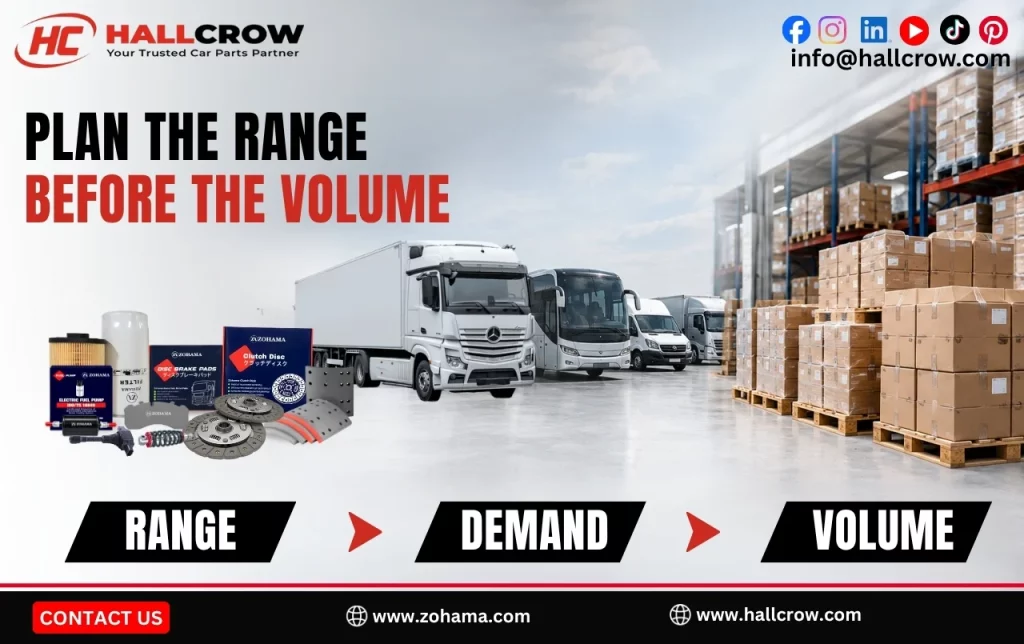
Plan the Range Before the Volume
The most common bulk-buying mistake is ordering deep before ordering wide, buying a lot of a few parts before knowing the range the market actually needs. Plan the range first: which systems your fleets consume most, which makes dominate locally, and which parts are the fast, repeating movers. Then weight the volume toward those. A bulk order matched to real fleet demand sells; one matched to a price offer sits.
| Plan first | Then decide the volume | Why |
|---|---|---|
| Which systems your fleets consume | Depth per system | Brakes and filters move faster than rare parts |
| Which vehicle makes dominate locally | Coverage per make | Match stock to the fleets on the road |
| Which parts are fast movers | Reorder priority | Fast movers fund the rest of the range |
The Bulk Order Sequence
A commercial bulk order runs cleanest in a set order:
- Send your part list, OE or WVA numbers and vehicle applications in the format you use.
- Get a quote with pricing, MOQ and lead time, and a sample on any new line before you commit.
- Approve samples and confirm the order, packaging and labelling.
- Take delivery with documentation handled for your destination market.
- Record what you approved and reorder against it, so batch two matches batch one.
Consolidate Suppliers to Protect Margin
Every supplier you add is another lead time, another quality standard and another set of paperwork to coordinate. Consolidating a bulk order across systems with one manufacturer protects margin in ways a lower unit price cannot: one relationship to hold accountable, one consistent standard, one document set, and better pricing as your total volume with that supplier grows. Range from one source is itself a margin lever.
Choosing that one supplier well is the decision everything else rests on; the guide to choosing an OEM brake pad supplier and the HallCrow Automotive manufacturer profile cover what to look for.
Storage, Lead Time and Reorder Rhythm
A bulk order does not end at delivery. Higher unit values mean stock has to be stored properly and turned at a rhythm that does not strangle your cash. Plan lead times so a reorder lands before a fast mover runs out, hold depth on the movers and less on the slow lines, and set a reorder cadence against your actual sell-through. A predictable rhythm with a reliable manufacturer is what turns bulk buying from a gamble into a supply line.
Buy in Bulk With Confidence
Bulk buying commercial parts rewards the distributor who plans the range, controls quality, consolidates suppliers and sets a repeatable rhythm. HallCrow manufactures heavy-vehicle parts across systems and supplies distributors and fleets across the Middle East, Africa, Central Asia and neighbouring regions. To plan a bulk order for your market, contact the HallCrow team.
Frequently Asked Questions
How is bulk buying commercial parts different from car parts?
Unit values are higher, the fitment range across trucks, buses and trailers is wider, and the parts are safety-critical, so a mistake ordered in volume costs more and carries more risk than with car parts.
Should I order deep or wide first?
Plan the range wide first, matched to the systems and makes your fleets actually run, then weight volume toward the fast movers. Ordering deep before knowing the range leaves stock sitting.
Why consolidate suppliers for a bulk order?
One manufacturer across systems means one lead time, one quality standard and one document set to manage, plus better pricing as your total volume grows. Range from one source is a margin lever.
How do I set a reorder rhythm?
Hold depth on fast movers, plan lead times so reorders land before stock runs out, and set a cadence against actual sell-through, so bulk buying becomes a predictable supply line rather than a one-off gamble.
Conclusion
Getting bulk buying right is a discipline: plan the range before the volume, control quality, consolidate suppliers and set a repeatable reorder rhythm. Do that and a bulk order protects margin and keeps fleets supplied instead of tying up capital. HallCrow manufactures the commercial-vehicle parts and supplies them factory-direct to distributors across its served markets.