“OEM” and “aftermarket” are two of the most used and least understood words in commercial parts sourcing, and the confusion costs distributors money. Stock only dealer-OEM and your prices are uncompetitive; stock bottom-end aftermarket and you inherit the returns. The useful question for a heavy-vehicle distributor is not which label is better, but what each actually means and where each fits in a range. This guide breaks it down and makes the case for the dependable middle ground most fleets actually want.
What the Terms Actually Mean
Start with definitions, because this is where most of the confusion lives:
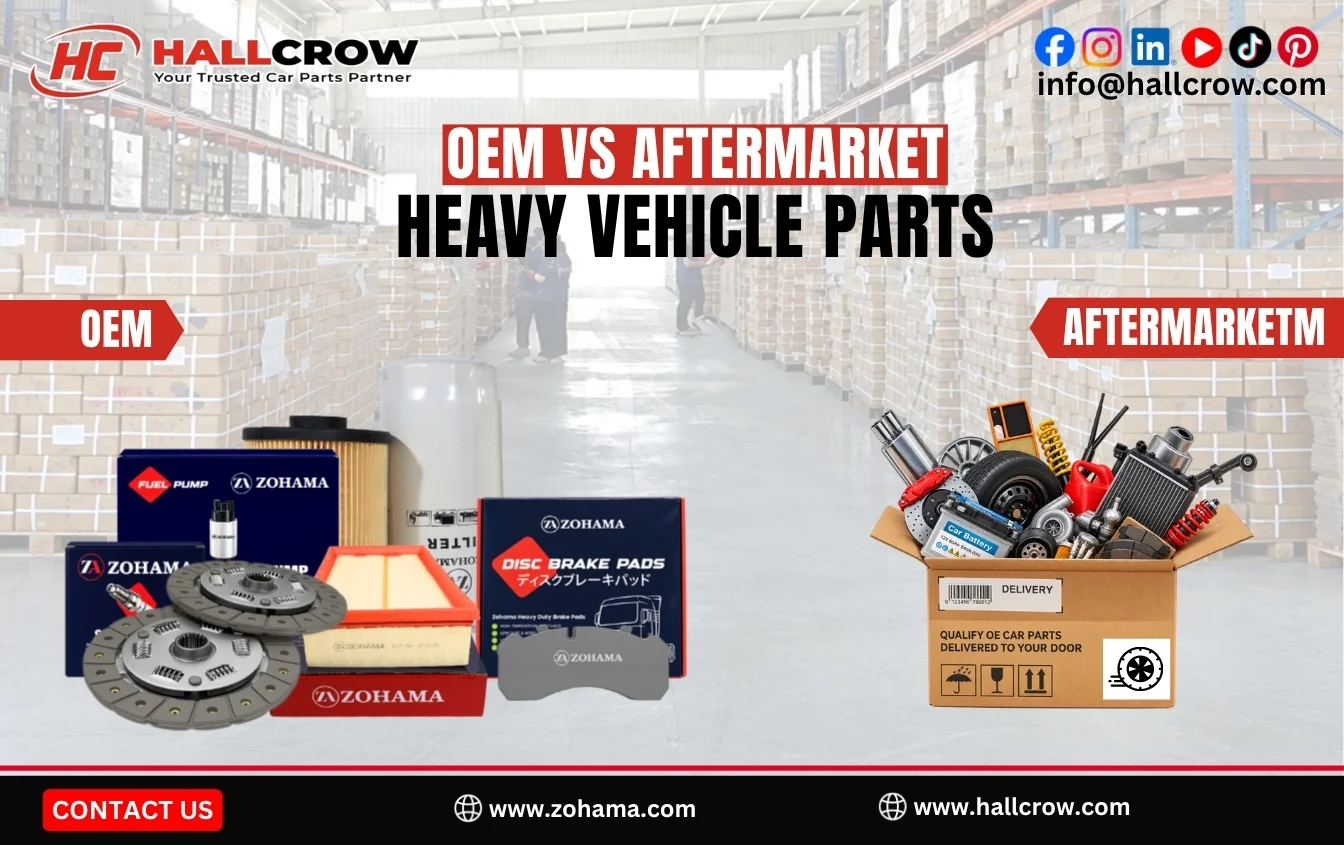
- OEM (dealer): the part sold through the vehicle manufacturer’s own channel, in their box, usually at the highest price.
- OEM-grade / OE-standard: a part built to the original-equipment fit, form and friction or material specification, carrying the OE reference, made by a manufacturer rather than the vehicle brand.
- Aftermarket: a broad term covering everything from OE-standard parts down to bottom-end commodity copies, which is exactly why the word alone tells a buyer very little.
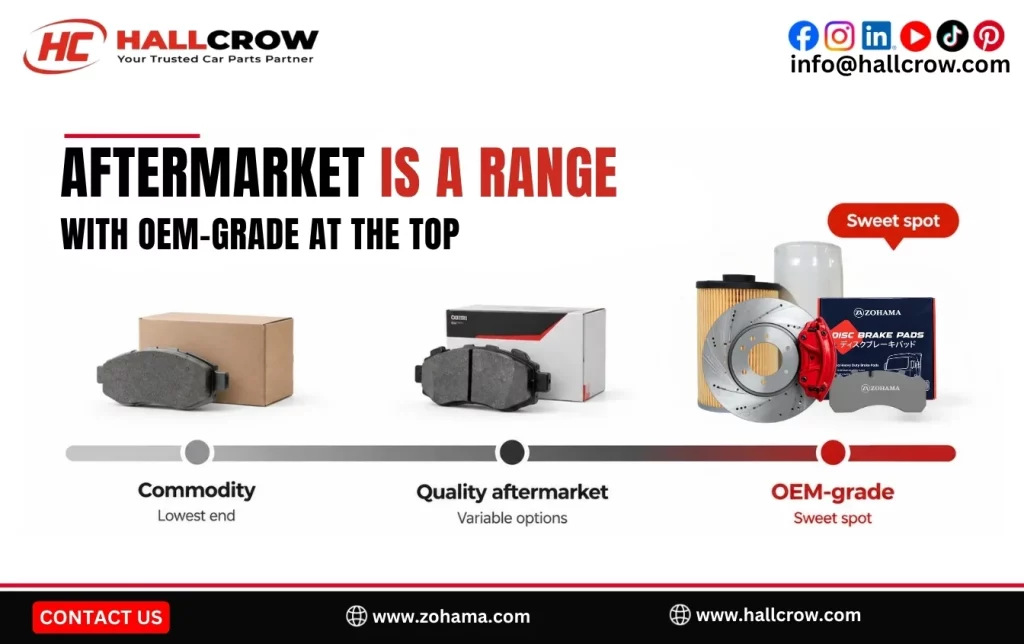
The key insight is that “aftermarket” is a range, not a quality level. A well-made OE-standard part and a loose-boxed copy are both “aftermarket”, and a distributor’s job is to source from the top of that range, not the bottom.
Where Each Fits in a Distributor’s Range
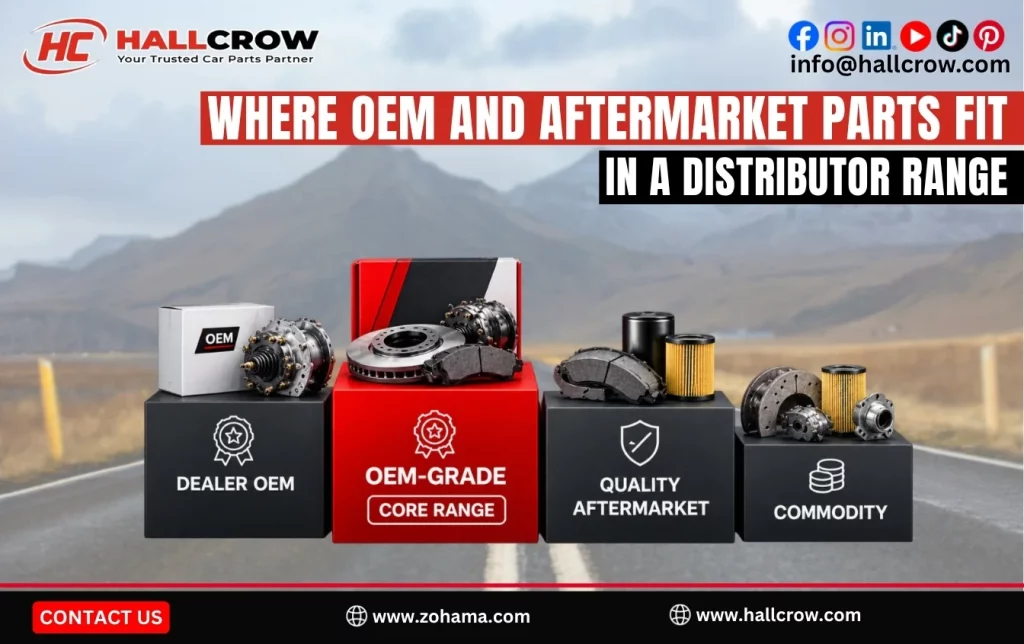
| Type | Strength | Where it fits |
|---|---|---|
| Dealer OEM | Guaranteed match, brand box | Niche demand willing to pay dealer prices |
| OEM-grade (manufacturer) | OE spec and reference, better price | The core of a distributor’s range |
| Quality aftermarket | Competitive price, sound quality | Value demand where OE match is less critical |
| Commodity aftermarket | Lowest price | High return and reputation risk; usually avoid |
For most fleets, OEM-grade from a manufacturer is the sweet spot: the fit and specification of the original without the dealer markup. That is what the HallCrow products range is built on.
Why OEM-Grade Is the Dependable Middle Ground
Fleets care about two things that pull in opposite directions: reliability and running cost. Dealer OEM delivers reliability at a price that erodes margin for everyone in the chain; bottom-end aftermarket delivers a low price that costs more in failures and downtime. OEM-grade parts from a real manufacturer resolve the tension. They are made to the original fit and specification and carry the OE reference, so they perform like the original, but they come factory-direct without the dealer premium, so the distributor and the fleet both keep margin.
The deciding factor is the manufacturer behind the part, which is why choosing one well matters; the guide to choosing an OEM brake pad supplier covers what to check.
How to Stock the Decision
A distributor does not have to pick one label for the whole range. The practical approach is to build the range mostly on OEM-grade, keep a little dealer-OEM for the niche demand that insists on it, carry quality aftermarket where price leads and an exact OE match matters less, and avoid the commodity end that generates returns. Weight the range to your market, and tie every line to its OE reference so the quality claim is verifiable, not just a word on a box.
Build an OEM-Grade Range
The OEM-versus-aftermarket debate dissolves once you see aftermarket as a range and OEM-grade as its top. Build on OEM-grade from a manufacturer and you give fleets original fit and specification at a price that keeps everyone’s margin. HallCrow manufactures OEM-grade heavy-vehicle parts and supplies distributors across the Middle East, Africa, Central Asia and neighbouring regions. To build an OEM-grade range for your market, contact the HallCrow team.
Frequently Asked Questions
What is the difference between OEM and aftermarket parts?
Dealer OEM is sold through the vehicle maker’s channel in their box. Aftermarket is everything else, from OE-standard parts made by a manufacturer down to commodity copies, so the word alone does not indicate quality.
Is OEM-grade the same as dealer OEM?
No. OEM-grade is built to the original fit, form and specification and carries the OE reference, but is made by a manufacturer rather than the vehicle brand, so it performs like the original without the dealer markup.
Which should a distributor stock?
Mostly OEM-grade from a manufacturer as the core, a little dealer OEM for niche demand, quality aftermarket where price leads, and avoid the commodity end that drives returns and reputation risk.
Why is OEM-grade the best value for fleets?
It gives original fit and specification, so it performs like the OE part, but comes factory-direct without the dealer premium, so both the distributor and the fleet keep margin.
Conclusion
OEM versus aftermarket is the wrong question; the right one is where in the range to source. Aftermarket is a spectrum, OEM-grade from a manufacturer is its top, and that is where most fleets are best served. Build the range there and the labels stop mattering. HallCrow manufactures OEM-grade heavy-vehicle parts for distributors across its served markets.