Filters are the quiet, high-turnover backbone of a commercial parts business. A truck or bus gets through air, oil and fuel filters on a far shorter cycle than it does brakes or clutches, which makes them one of the most reliable repeat lines a distributor can carry, and one of the easiest to get wrong if quality and fitment are treated as an afterthought. This guide explains what each filter does on a heavy vehicle, why quality matters more than it looks, and how to stock a filter range that keeps fleets coming back.
Why Filters Are a Distributor’s Steadiest Line
Filters sell on frequency. Every service interval replaces them, fleets run that interval hard to protect expensive engines, and the demand never really stops. For a distributor that means a deep, fast-moving, self-renewing line that turns over far quicker than most other parts on the shelf. A business that stocks filters well has a dependable base of repeat orders to build the rest of the range around.
HallCrow’s products range includes the commercial filter systems, so a distributor can carry air, oil and fuel filters alongside the rest of the heavy-vehicle range from one manufacturer.
The Three Core Filters and What They Do
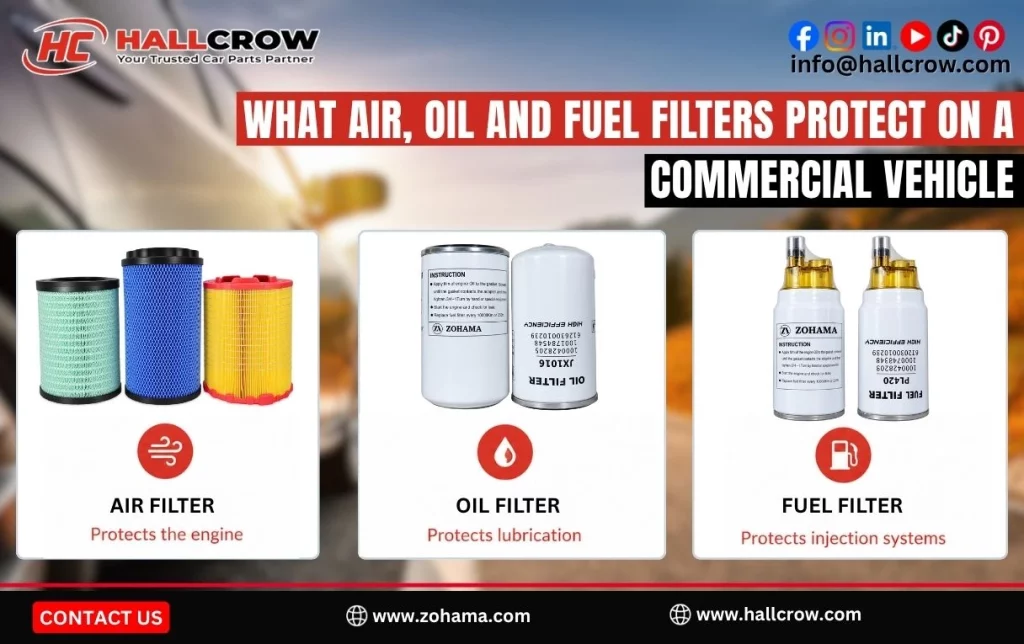
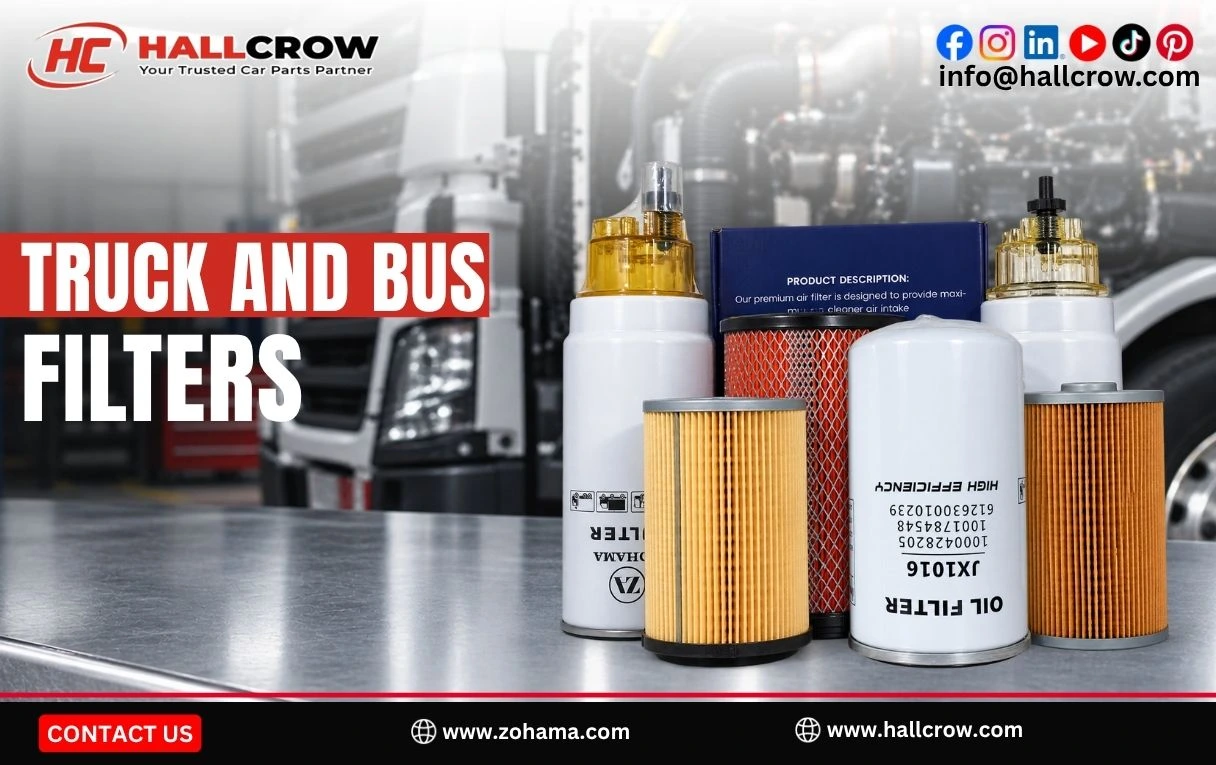
Three filters do the essential work on a truck or bus engine, and each protects something expensive:
- Air filter: keeps dust and grit out of the engine’s intake. On vehicles working in dusty conditions it is replaced often, and a poor one lets abrasive particles wear the engine.
- Oil filter: removes contaminants from the engine oil so the oil can protect the engine. A weak filter or a bypass that opens too early lets unfiltered oil circulate.
- Fuel filter: traps dirt and water before they reach the injection system. On modern diesels the injection system is precise and costly, so fuel filtration is critical.
Why Filter Quality Matters More Than It Looks
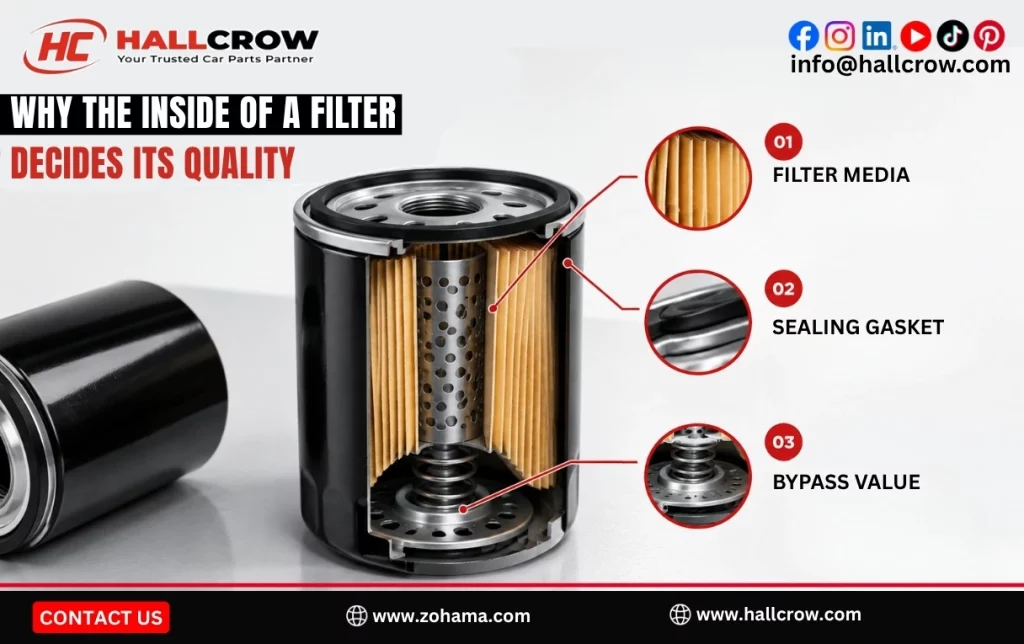
A filter looks simple, which is exactly why cheap ones get sold. The difference is inside: the media quality, the seam and seal integrity, and the correct bypass and anti-drainback behaviour. A poor filter can look identical to a good one and still let contaminants through, collapse under flow, or fail to seal, and on a heavy vehicle the cost of that is not the filter, it is the engine or the injection system it was supposed to protect. For a distributor, a cheap filter that causes an engine failure is the most expensive part they ever sold.
| Filter | Protects | What a poor one costs |
|---|---|---|
| Air | Engine intake and internals | Abrasive wear, lost power, shortened engine life |
| Oil | Engine lubrication | Unfiltered oil, accelerated engine wear |
| Fuel | Injection system | Injector damage, costly diesel repairs |
Fitment and Range Still Matter
Filters are fitment parts like any other. The wrong thread, seal diameter or size does not fit or does not seal, so a filter range has to be matched to the trucks and buses your market actually runs, by reference number, not guessed by eye. A distributor who can supply the right air, oil and fuel filters for the common fleets in the region, consistently, becomes the easy first call for every service.
Sourcing the filter range from the same manufacturer as the rest of the parts keeps quality and documentation consistent; the HallCrow Automotive manufacturer profile sets out that production side.
Stock a Filter Range That Keeps Fleets Coming Back
Filters are frequency business: high turnover, repeat demand, and a quiet dependence on quality that only shows when a cheap one fails. Stock good air, oil and fuel filters matched to your market’s fleets and you own the service cycle. HallCrow manufactures commercial vehicle filters and supplies distributors across the Middle East, Africa, Central Asia and neighbouring regions. To build a filter range for your market, see the filter system range or contact the HallCrow team.
Frequently Asked Questions
Why are filters a good line for a commercial parts distributor?
Filters are replaced at every service and fleets run that interval hard to protect their engines, so they turn over faster than almost any other part, giving a deep, self-renewing repeat line.
What do the three main truck filters do?
The air filter keeps grit out of the engine intake, the oil filter removes contaminants from the engine oil, and the fuel filter traps dirt and water before they reach the injection system.
Does filter quality really matter?
Yes. Media quality, seals and correct bypass behaviour decide whether a filter actually protects the engine. A poor filter can look identical and still cause expensive engine or injector damage.
How do I choose the right filters to stock?
Match the range to the trucks and buses your market runs, by reference number not by eye, and source from one manufacturer so quality and documentation stay consistent across every filter.
Conclusion
Filters are the steady, high-frequency backbone of a commercial parts range, and their value depends entirely on a quality that does not show from the outside. Stock good air, oil and fuel filters matched to your fleets and you own the service cycle. HallCrow manufactures commercial vehicle filters for distributors across its served markets.