ECE R90 is the standard that separates a proven replacement brake pad from an unproven one, and for a commercial parts distributor it is one of the most important three characters on a box. Buyers and fleets increasingly ask for it, and in many markets it is required. This guide explains what ECE R90 is, what it actually tests, why it matters for safety-critical commercial braking, and why a distributor should only stock pads that carry it.
What ECE R90 Is
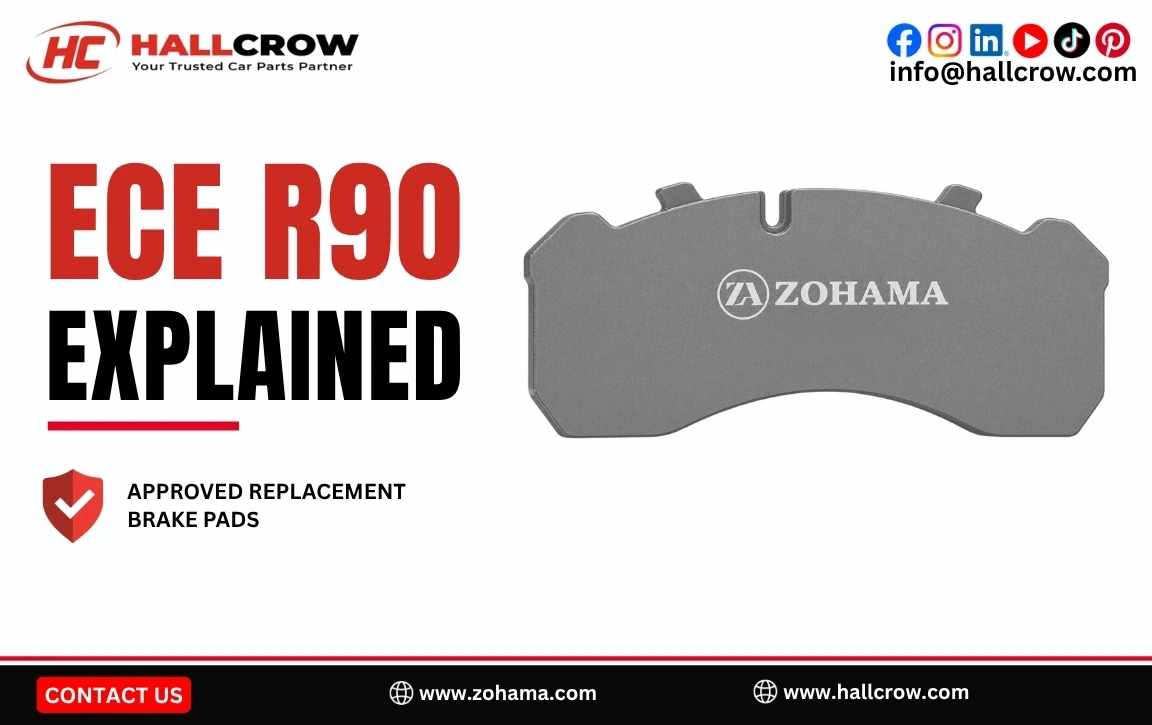
ECE R90 is an international regulation that sets performance requirements for replacement brake parts, including brake pads, so that a replacement performs comparably to the original equipment it replaces. Before it existed, a replacement pad could claim to fit a vehicle without any proof that it would brake like the part it replaced. ECE R90 closed that gap: an approved pad has been tested and certified to perform to a defined standard, not just to fit the caliper.
Every HallCrow commercial pad is produced to ECE R90, across the brake system range and the Brake Pads by HallCrow range.
What ECE R90 Actually Tests
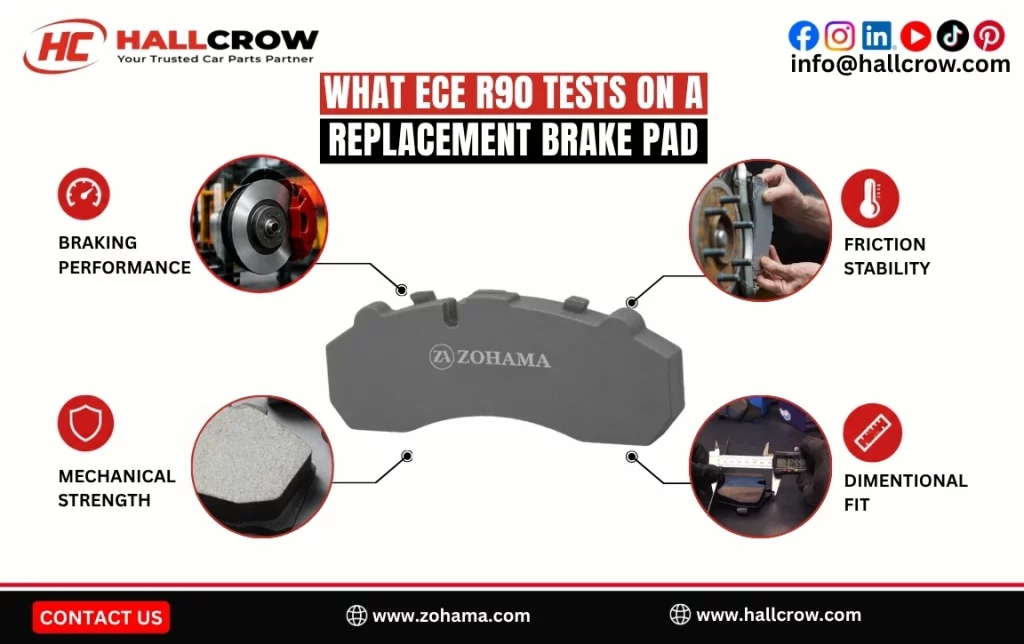
Approval is not a paperwork exercise; it is based on physical testing of how the pad performs and holds together. In broad terms it covers:
| ECE R90 checks | What it proves |
|---|---|
| Performance equivalence | The pad brakes comparably to the original equipment |
| Friction consistency | Stable, predictable friction across conditions |
| Mechanical strength | The pad and bond hold up under braking loads |
| Dimensional accuracy | The pad matches the specification it claims to replace |
How the friction compound underpins that performance is covered in the brake pad material and stopping power guide.
Why It Matters for Commercial Braking
On a loaded truck or bus, the brake pad is as safety-critical as a part gets, and the consequences of an underperforming one are measured in stopping distance, not inconvenience. ECE R90 matters because it is independent proof that a replacement pad will actually brake like the original, under the loads and temperatures commercial vehicles generate. For a fleet it is assurance; for a distributor it is protection, because selling an unapproved pad into a safety-critical application is a liability no margin covers.
Why a Distributor Should Only Stock ECE R90 Pads
The commercial reasons line up with the safety ones:
- Market requirement: many markets require ECE R90 on replacement pads, so unapproved stock cannot be sold legally.
- Buyer expectation: fleets and importers increasingly ask for the approval before they order.
- Liability protection: an approved pad is proven to perform, which protects you if a failure is ever questioned.
- Reputation: consistently approved stock is what makes a distributor a trusted supplier rather than a risk.
Confirming a supplier actually holds the approval, rather than just claiming it, is part of vetting them; the guide to choosing an OEM brake pad supplier covers what to check.
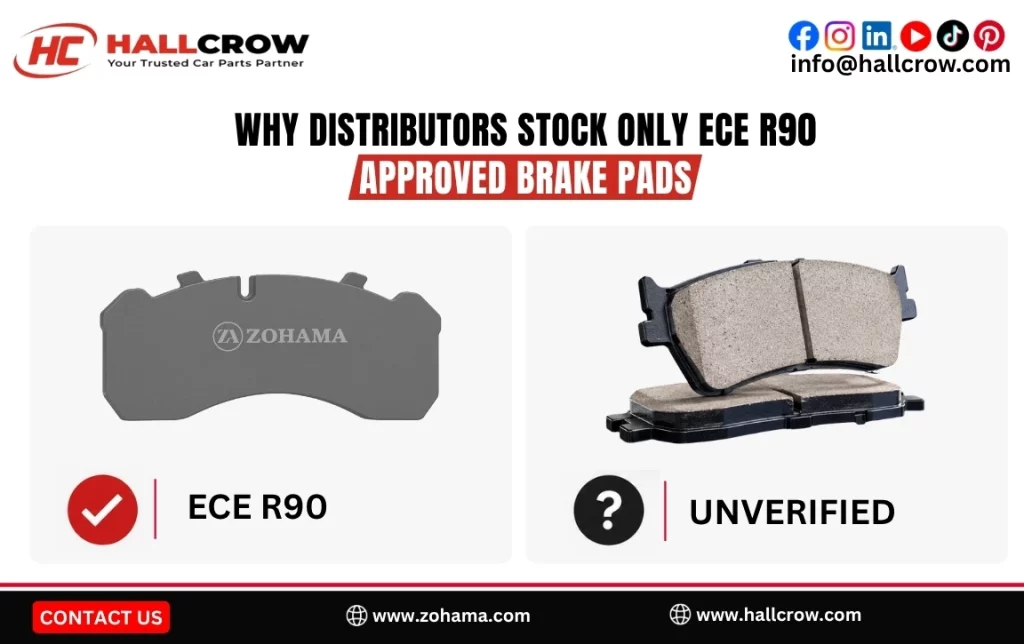
Stock Only Approved Pads
ECE R90 is the line between a proven replacement brake pad and an unproven one, and on safety-critical commercial braking there is no reason to stock the wrong side of it. HallCrow produces every commercial brake pad to ECE R90 and supplies distributors across the Middle East, Africa, Central Asia and neighbouring regions. To source ECE R90 approved pads for your market, contact the HallCrow team.
Frequently Asked Questions
What is ECE R90?
It is an international regulation setting performance requirements for replacement brake parts, so an approved replacement pad is tested and certified to perform comparably to the original equipment it replaces, not just to fit.
What does ECE R90 test?
Broadly, performance equivalence to the original, friction consistency, mechanical strength under braking loads, and dimensional accuracy against the specification the pad claims to replace.
Why does ECE R90 matter for trucks and buses?
Commercial brake pads are safety-critical, and ECE R90 is independent proof a replacement will brake like the original under the loads and temperatures heavy vehicles generate, which protects fleets and distributors alike.
Should a distributor stock non-approved pads?
No. Many markets require ECE R90, buyers expect it, and selling an unapproved pad into a safety-critical application is a liability. Approved stock protects both safety and the business.
Conclusion
ECE R90 is the standard that proves a replacement brake pad performs like the original, and on commercial braking it is non-negotiable. For a distributor, stocking only approved pads protects safety, meets market requirements and builds trust. HallCrow produces every commercial pad to ECE R90 for distributors across its served markets.