On a heavy vehicle, the friction compound is not a detail, it is what decides whether a loaded truck stops cleanly on the tenth hard brake of a descent or fades on the third. Two compounds dominate the commercial market, semi-metallic and low-metallic, and they behave differently enough that stocking the wrong one for a fleet costs performance and returns. This guide explains what separates the two, where each performs best, and how a distributor should stock both for the mixed fleets most markets run.
What the Two Compounds Are
Both are built around metal content in the friction material, but in different proportions, and that proportion changes how the pad behaves:
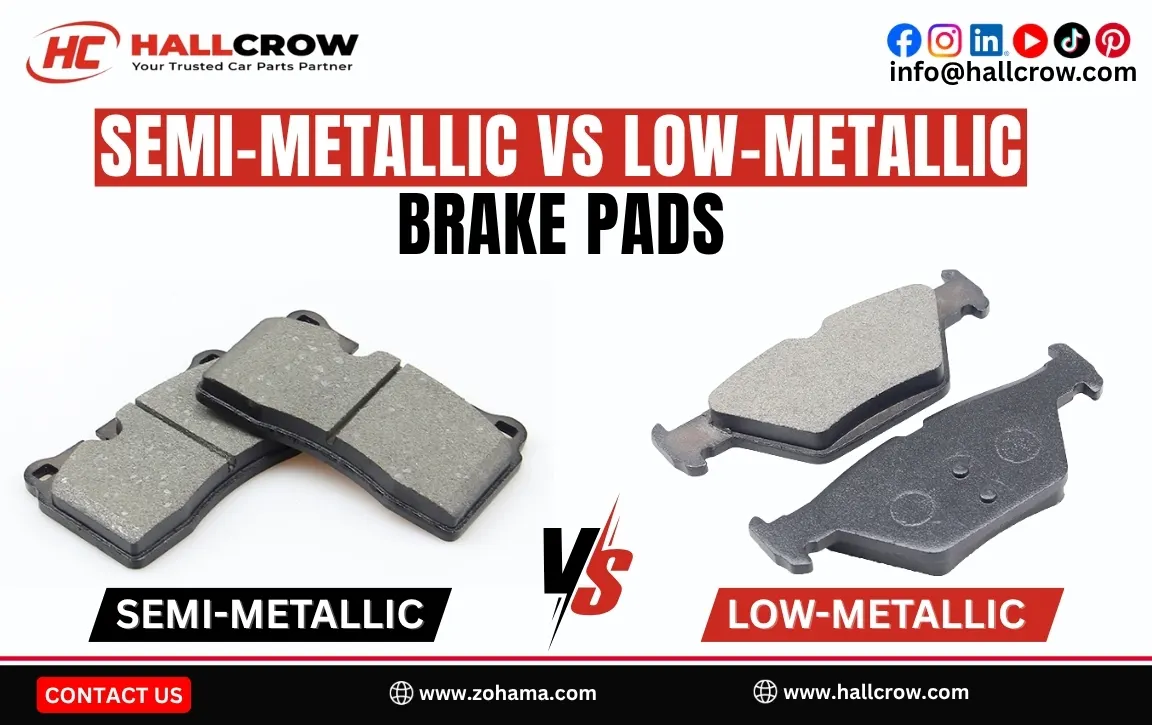
- Semi-metallic: a high metal content, typically steel fibres and other metals in the compound. Strong on heat capacity and high-load performance, which suits the hardest commercial duty.
- Low-metallic: a lower metal content with more organic and friction-modifier content. Strong on bite, smoothness and reduced noise, with good everyday performance.
Neither is simply better; they are tuned for different priorities. How compound choice affects stopping power is covered in depth in the brake pad material and stopping power guide.
How They Compare
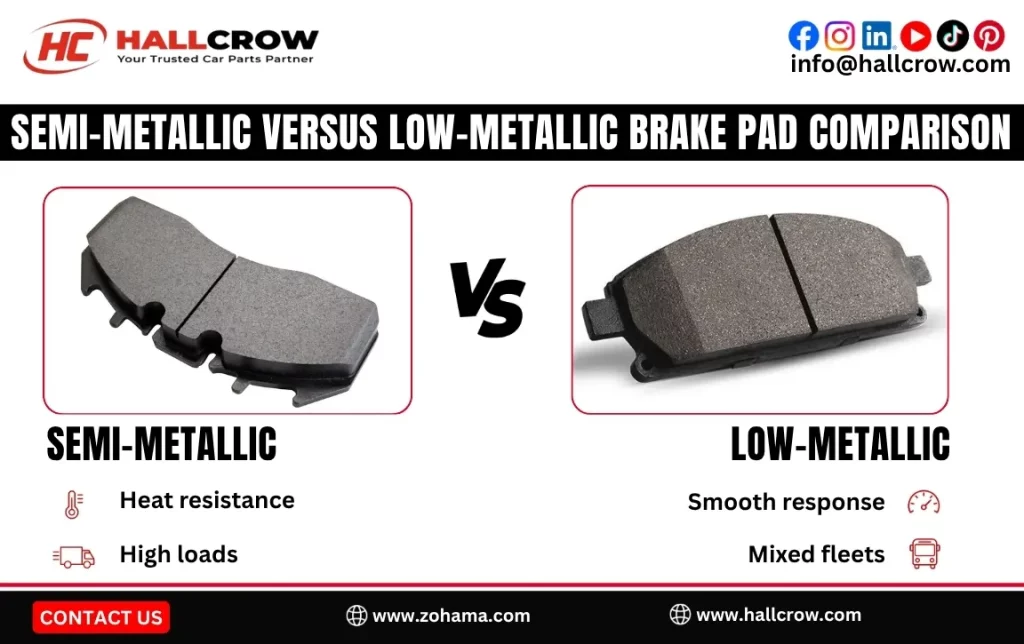
| Factor | Semi-metallic | Low-metallic |
|---|---|---|
| Heat capacity | Very high; resists fade under heavy load | High; good for normal and mixed duty |
| Bite / feel | Strong under load | Smooth, responsive everyday bite |
| Noise and dust | Can be higher | Generally lower |
| Rotor wear | Slightly higher | Gentler on the rotor |
| Best suited to | Heavy haul, long descents, high load | Mixed fleets, regional and urban duty |
Where Semi-Metallic Wins
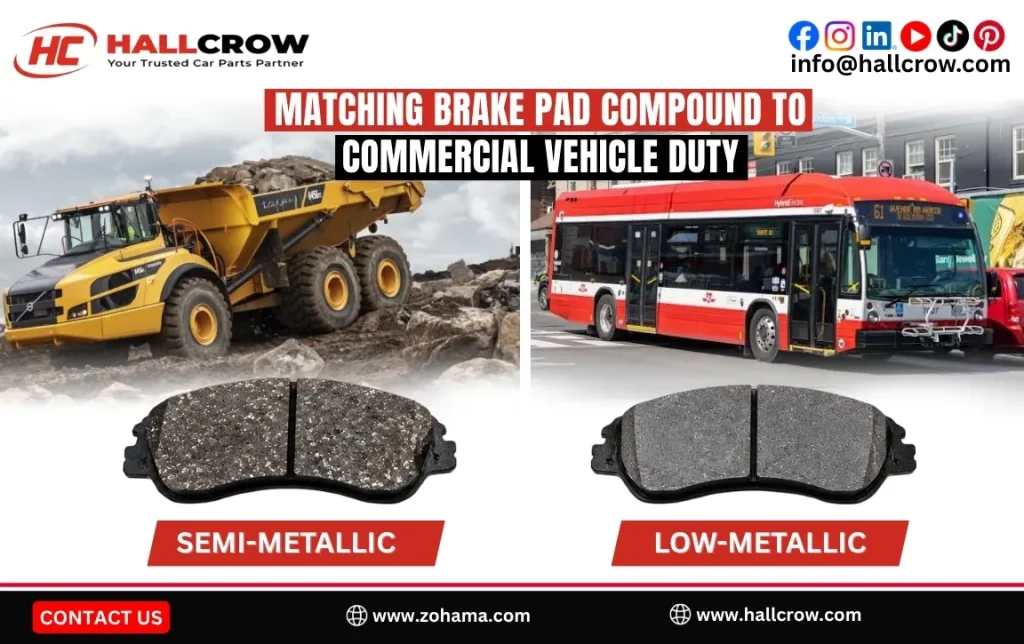
Semi-metallic compounds come into their own where the braking is hardest: heavily loaded trucks, long mountain descents, and high-temperature, high-energy duty where fade is the enemy. The high metal content gives the pad the heat capacity to keep working when a lighter compound would start to fade, which is why it suits heavy-haul and demanding commercial applications. The trade-off is usually a little more noise, dust and rotor wear, which experienced fleets accept in exchange for the heat performance.
Where Low-Metallic Wins
Low-metallic compounds suit the broader middle of commercial duty: regional distribution, urban buses, and mixed fleets that brake often but not always at extreme loads. The compound gives a smooth, responsive bite with less noise and dust and gentler rotor wear, which matters for vehicles stopping and starting constantly and for operators who value refinement and long rotor life. For much of a mixed fleet, low-metallic is the sensible everyday choice.
How a Distributor Should Stock Both
Because most markets run mixed fleets, the practical answer is rarely one compound. Stock to the duty your fleets actually run:
- Weight semi-metallic toward customers running heavy haul, loaded long-distance or mountainous routes.
- Weight low-metallic toward regional, urban and bus fleets where refinement and rotor life matter.
- Match the compound to the application, not just the WVA number, since some references are offered in more than one compound.
- Source both from one manufacturer so quality and documentation stay consistent across the range.
The WVA-referenced pads on the HallCrow brake pads range cover both compound types, and the brake system range shows how they fit the commercial braking systems.
Stock the Right Compound for the Duty
Semi-metallic and low-metallic are not better or worse, they are built for different duty, and a distributor who stocks both matched to the fleets in the market serves every customer correctly. HallCrow manufactures both compound types for heavy vehicles and supplies distributors across the Middle East, Africa, Central Asia and neighbouring regions. To build a compound-matched range for your market, see the products range or contact the HallCrow team.
Frequently Asked Questions
What is the difference between semi-metallic and low-metallic brake pads?
Both use metal in the friction material, but semi-metallic has a higher metal content for heat capacity and high-load performance, while low-metallic has less metal for smoother bite, lower noise and gentler rotor wear.
Which is better for heavy loads?
Semi-metallic, because its high metal content gives the heat capacity to resist fade under heavy load, long descents and high-energy braking where a lighter compound would fade.
When should a fleet use low-metallic pads?
For regional, urban and bus duty where braking is frequent but not always at extreme load, and where smooth bite, lower noise and dust, and longer rotor life matter.
Should a distributor stock both compounds?
Yes. Most markets run mixed fleets, so stocking both and matching the compound to the duty, not just the WVA number, serves every customer correctly.
Conclusion
Semi-metallic and low-metallic compounds are tuned for different commercial duty: semi-metallic for heat and heavy load, low-metallic for smooth, refined, frequent braking. A distributor who understands the difference and stocks both matched to the fleet serves the whole market. HallCrow manufactures both for heavy vehicles across its served regions.