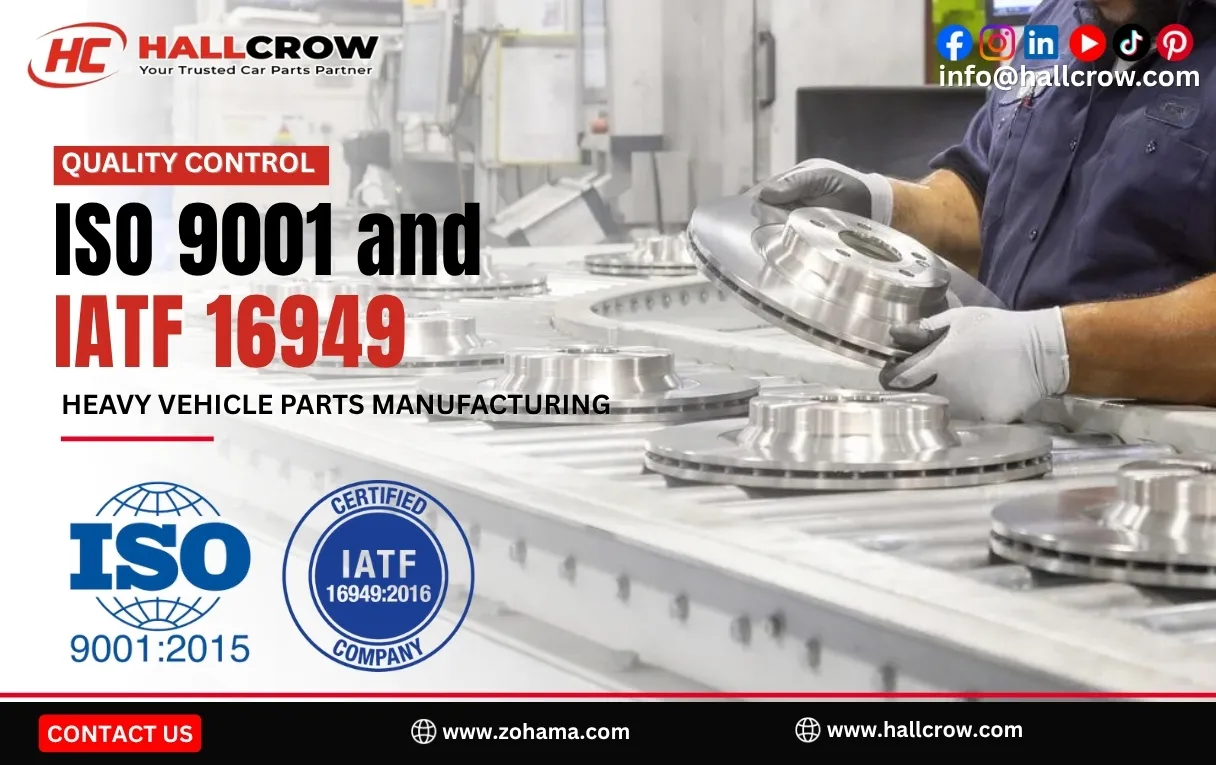
When a distributor asks a supplier for quality certification, two standards come up: ISO 9001 and IATF 16949. They are often named together, but they are not the same thing, and the difference tells a buyer a great deal about the factory behind a part. For safety-critical heavy-vehicle components, knowing what each standard actually governs is one of the clearest ways to separate a serious manufacturer from a basic one. This guide explains what each is, how they differ, and why a distributor should source from a manufacturer that holds both.
What ISO 9001 Is
ISO 9001 is the international standard for a quality management system. It sets out how an organisation manages its processes to deliver consistent quality and improve over time: documented procedures, traceability, corrective action when something goes wrong, and a focus on meeting requirements. It applies to almost any industry, not just automotive, so it is the broad foundation of a quality-run business rather than a motor-specific standard.
ISO 9001 is the baseline a serious manufacturer runs on, and it underpins the production described on the HallCrow Automotive manufacturer profile.
What IATF 16949 Is
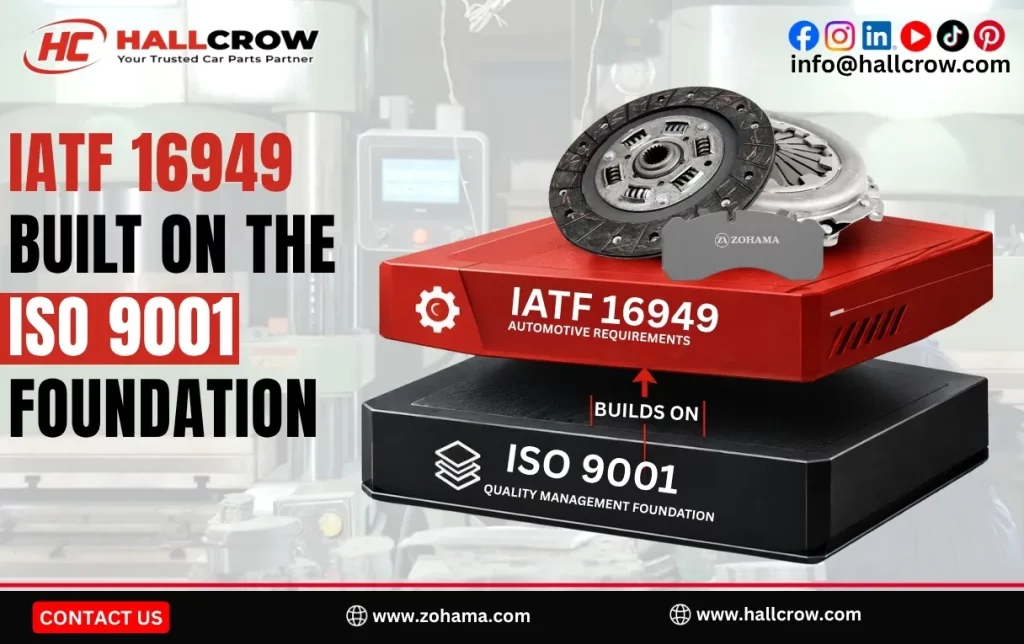
IATF 16949 is the automotive-specific quality standard, built on top of ISO 9001 and developed by the International Automotive Task Force. It adds the requirements that matter specifically for making vehicle parts: defect prevention, reduction of variation and waste, control of the production process, and the discipline the automotive supply chain demands. Where ISO 9001 says an organisation runs a sound quality system, IATF 16949 says that system is built for manufacturing automotive parts to the standard the industry requires.
How They Differ
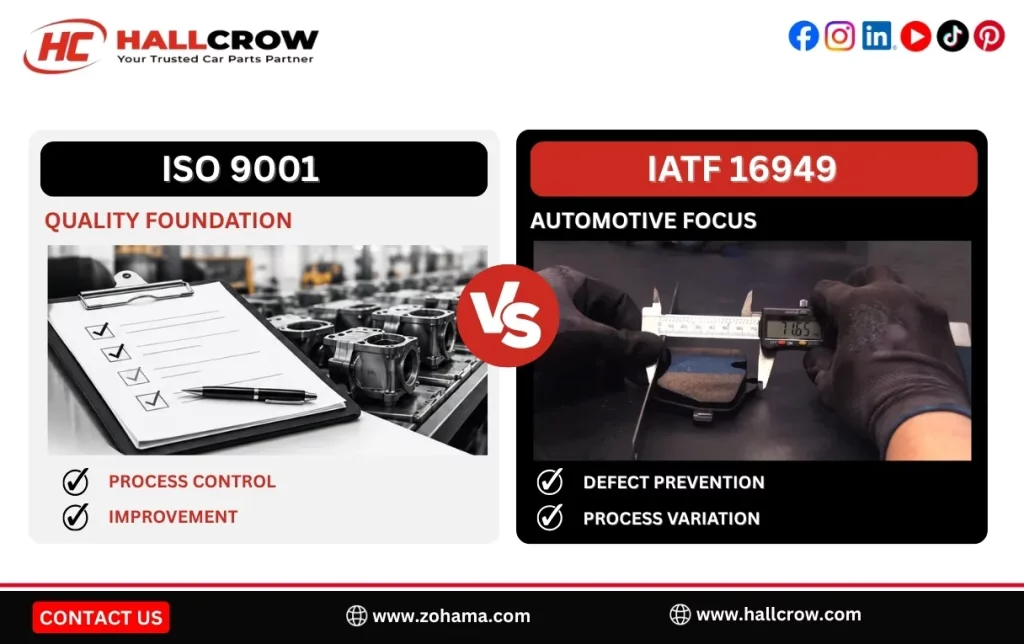
| Factor | ISO 9001 | IATF 16949 |
|---|---|---|
| Scope | Any industry | Automotive parts specifically |
| Built on | Quality management foundation | ISO 9001 plus automotive requirements |
| Focus | Consistent quality, improvement | Defect prevention, variation control, process discipline |
| What it signals | A sound quality system | A system built for making auto parts |
Why Both Matter for Heavy-Vehicle Parts
Heavy-vehicle parts are safety-critical and made in volume, so consistency is everything: the ten-thousandth pad or bearing has to be as good as the first. ISO 9001 shows the factory runs a disciplined quality system; IATF 16949 shows that system is purpose-built for automotive manufacturing, with the defect-prevention and variation-control the parts demand. A manufacturer that holds both is telling a distributor that quality is engineered into the process, not inspected in at the end.
Why a Distributor Should Ask for Both
For a buyer, the certifications are a fast, reliable filter:
- They separate a real manufacturer from a trader, because a trader cannot certify production it does not control.
- They predict batch consistency, which is what protects you from the returns a variable supplier generates.
- They are often required or expected by your own customers, so certified stock is easier to sell.
- They should be provided on request; a supplier slow to show the certificates is answering the question anyway.
Confirming a supplier actually holds the standards, rather than just claiming them, is part of vetting them; the guide to choosing an OEM brake pad supplier covers what to check.
Source From a Certified Manufacturer
ISO 9001 and IATF 16949 together are the signature of a factory that builds quality into the process, which is exactly what safety-critical heavy-vehicle parts need. HallCrow manufactures to these standards and supplies distributors across the Middle East, Africa, Central Asia and neighbouring regions. To source certified heavy-vehicle parts for your market, see the products range, read the About HallCrow page, or contact the HallCrow team.
Frequently Asked Questions
What is the difference between ISO 9001 and IATF 16949?
ISO 9001 is a general quality management standard for any industry. IATF 16949 is built on top of it and adds automotive-specific requirements like defect prevention and variation control, so it signals a system purpose-built for making vehicle parts.
Why do both matter for heavy-vehicle parts?
Heavy-vehicle parts are safety-critical and made in volume, so consistency is everything. ISO 9001 shows a disciplined quality system; IATF 16949 shows it is built for automotive manufacturing, so quality is engineered in, not inspected at the end.
Should a distributor ask for these certifications?
Yes. They separate a manufacturer from a trader, predict batch consistency, are often required by your own customers, and should be provided on request. A supplier slow to show them is answering the question anyway.
Does certification guarantee a good part?
It shows the process is built for consistent quality, which is the strongest predictor available before you sample. Combine the certifications with a physical sample and OE-referenced fitment to confirm the part itself.
Conclusion
ISO 9001 and IATF 16949 are not interchangeable: one shows a sound quality system, the other shows it is built for making automotive parts, and together they mark a serious manufacturer. For safety-critical heavy-vehicle components, a distributor should source from a factory that holds both. HallCrow manufactures to these standards for distributors across its served markets.