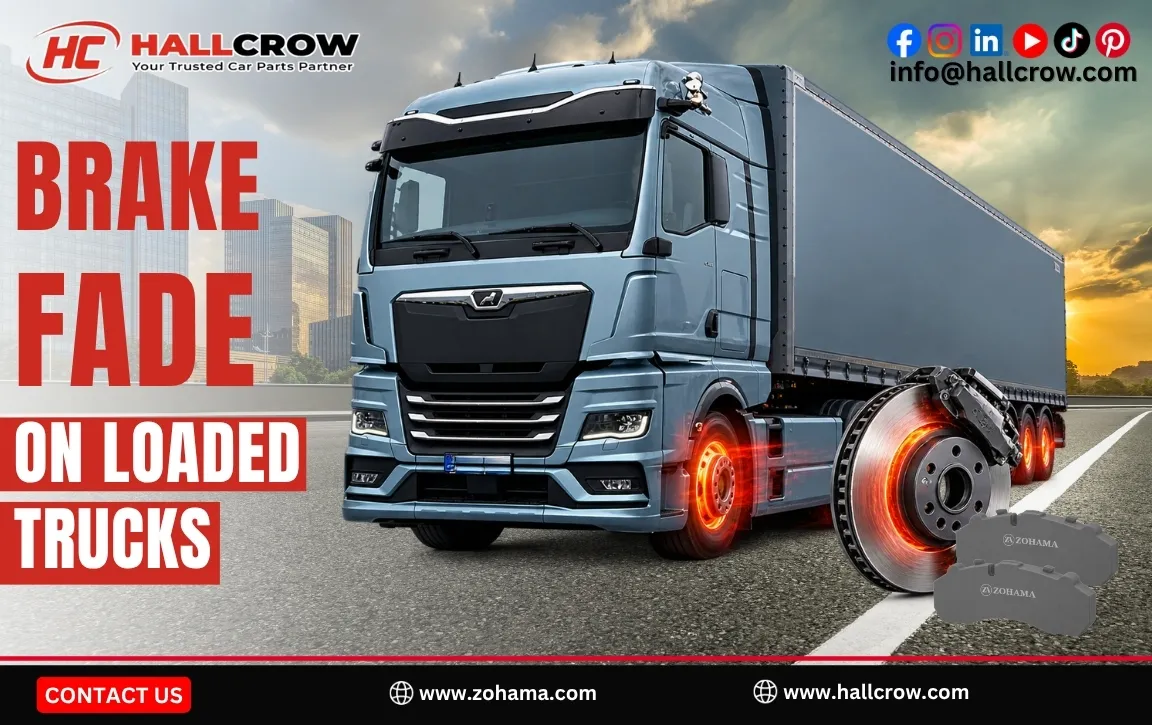
Brake fade is the loss of braking power when a brake gets too hot, and on a loaded truck it is one of the most dangerous conditions a driver can face. A fully laden vehicle on a long descent puts enormous, sustained energy through the brakes, and if the system cannot shed the heat, stopping power drops away exactly when it is needed most. For fleets it is a safety issue, and for the distributors who supply them it is a reason the right parts matter. This guide explains what causes fade, how to recognise it, and how the right pads, discs and practice prevent it.
What Brake Fade Is
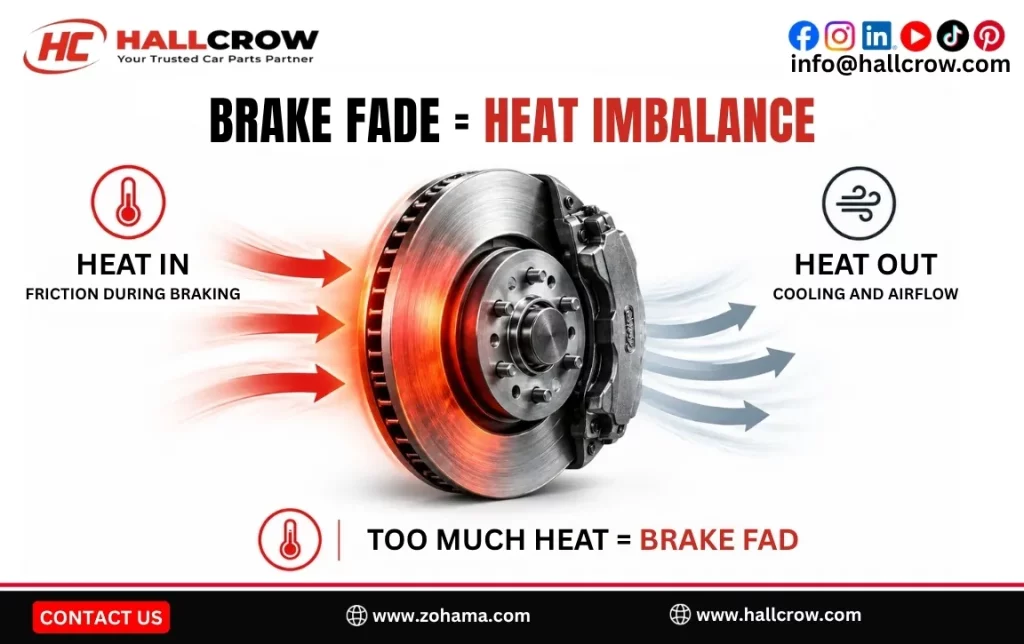
Braking works by turning the vehicle’s motion into heat through friction. Brake fade happens when that heat builds up faster than the system can shed it, and the friction material can no longer generate the same stopping force. The pedal may still feel firm, but the truck does not slow as it should. On a loaded commercial vehicle, where the energy involved is huge, fade can turn a routine descent into an emergency.
Understanding how the friction compound behaves under heat is central to preventing it; the brake pad material and stopping power guide covers it.
What Causes Brake Fade
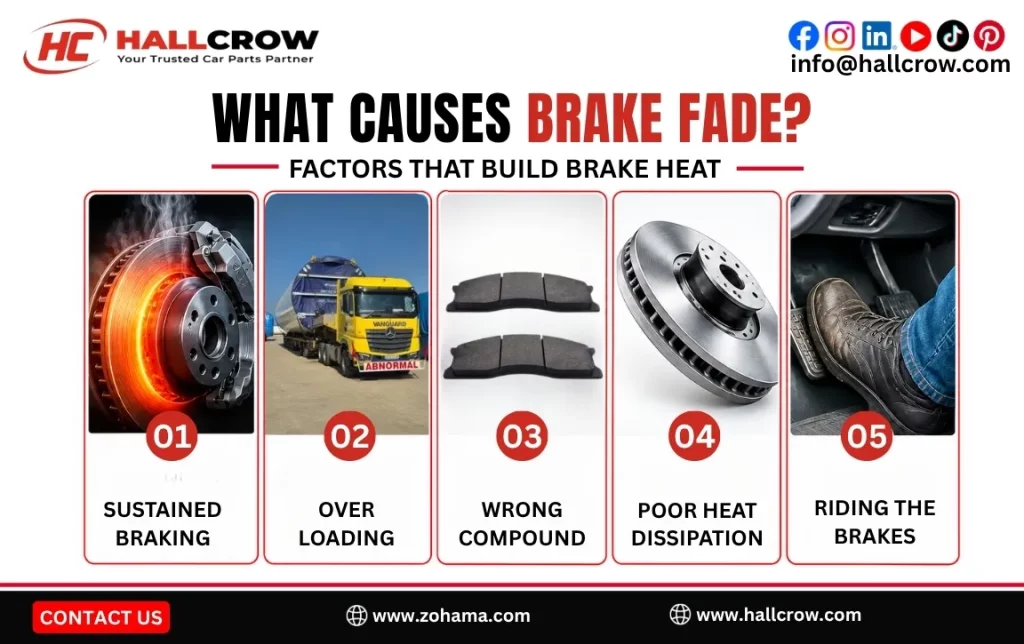
Fade has a few main causes, and they often combine on a loaded truck:
| Cause | What happens |
|---|---|
| Sustained heavy braking | Long descents build heat faster than it is shed |
| Overloading | More weight means more energy and more heat per stop |
| Wrong friction compound | A pad not rated for the heat loses grip as it gets hot |
| Poor heat dissipation | Worn or low-quality discs and drums shed heat poorly |
| Riding the brakes | Continuous light braking keeps the system hot |
The Types of Fade
Fade shows up in more than one way, and knowing which helps address it:
- Friction fade: the pad compound overheats and loses grip; the most common on loaded descents.
- Mechanical fade (on drums): the drum expands away from the shoes as it heats, reducing contact.
- Fluid or gas effects: overheating can also affect hydraulic systems, though commercial air brakes behave differently.
How the Right Parts Prevent Fade
Fade is largely a heat problem, so prevention is about managing heat, and the parts a distributor supplies are central to that. The right friction compound, rated for the heat the application generates, keeps its grip where a cheaper pad fades. Quality discs and drums with good heat dissipation shed that heat faster. And air-disc brakes, with their open rotors, resist fade better than drums under sustained load, which is part of why heavy vehicles are moving to them. Supplying the correct, heat-capable parts is how a distributor helps a fleet stay safe.
The compound choice matters most here; semi-metallic pads suit the highest-heat duty, as covered across the HallCrow brake pads range and the brake system range.
How Fleets Prevent Fade in Practice
Alongside the right parts, driving and maintenance practice prevent fade:
- Use engine braking and lower gears on long descents instead of riding the service brakes.
- Avoid overloading beyond the vehicle’s rated capacity.
- Maintain the brakes, replacing worn pads and discs before they lose heat capacity.
- Specify the correct, heat-rated friction compound for the routes the fleet runs.
Supply Fleets the Parts That Resist Fade
Brake fade is a heat problem, and the right heat-capable pads and discs are a core part of preventing it on loaded trucks. A distributor who supplies correct, certified, heat-rated parts helps keep fleets safe and earns their trust. HallCrow manufactures heavy-vehicle braking parts built for the heat commercial braking generates, and supplies distributors across the Middle East, Africa, Central Asia and neighbouring regions. To build a range that resists fade, see the products range or contact the HallCrow team.
Frequently Asked Questions
What is brake fade?
It is the loss of braking power when a brake gets too hot and the friction material can no longer generate the same stopping force, so the vehicle does not slow as it should even though the pedal feels firm.
What causes brake fade on a loaded truck?
Sustained heavy braking on long descents, overloading, a friction compound not rated for the heat, poor heat dissipation from worn or low-quality discs and drums, and riding the brakes, often in combination.
How do the right parts prevent fade?
A heat-rated friction compound keeps its grip where a cheaper pad fades, quality discs and drums shed heat faster, and air-disc brakes resist fade better under sustained load than drums.
How can a fleet prevent brake fade?
Use engine braking and lower gears on descents, avoid overloading, maintain and replace worn brake parts, and specify the correct heat-rated compound for the routes the fleet runs.
Conclusion
Brake fade is a heat problem that turns dangerous on a loaded truck, and preventing it comes down to managing heat: the right heat-capable pads and discs, well maintained, with sensible driving. For a distributor, supplying correct, certified parts is how you help a fleet stay safe. HallCrow manufactures heavy-vehicle braking parts built for the heat, for distributors across its served markets.