Two suppliers quote you the same heavy-vehicle brake pad at a similar price. One is a manufacturer; the other is a trading company. On paper they look identical. In practice, that single difference shapes your quality, your margin and your risk for the life of the relationship. This article explains what actually separates the two, why it matters more on commercial parts than almost anywhere else, and how a distributor can tell which one they are really dealing with.
Start With a Simple Question
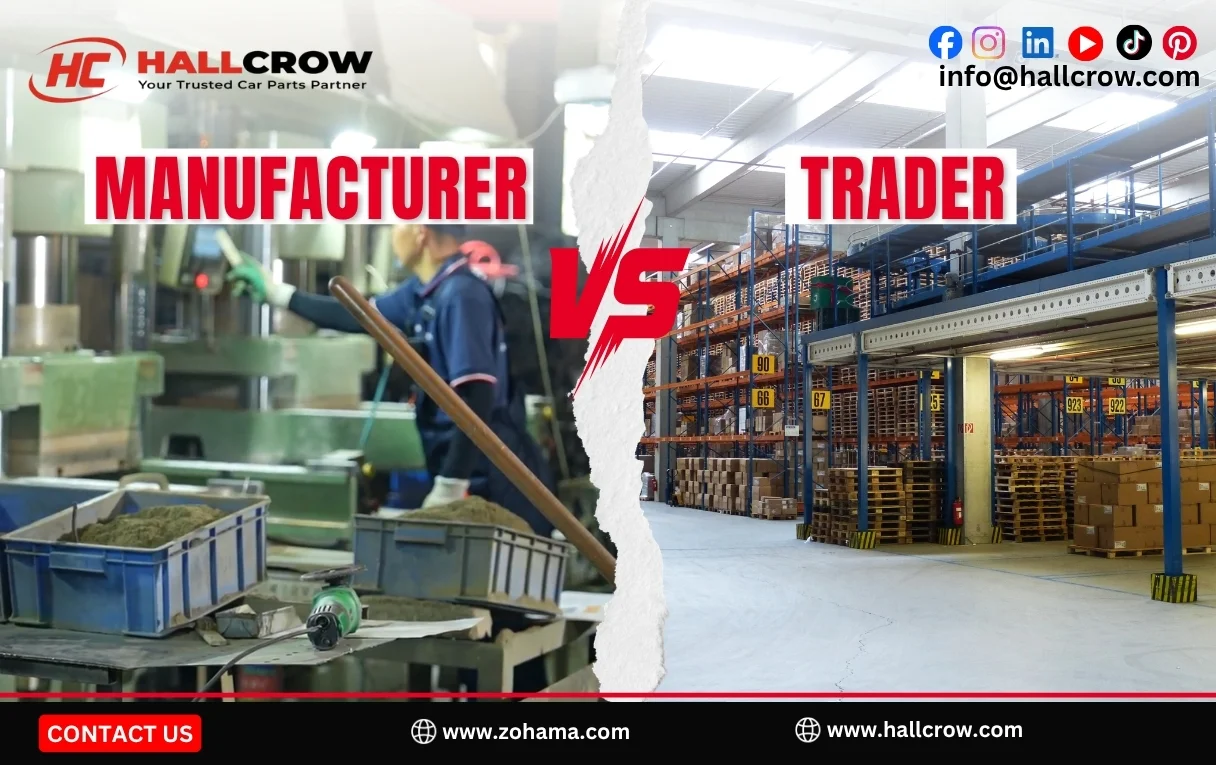
Before comparing prices, ask one thing: does this supplier make the part, or just move it? A trading company sources finished parts from various factories and resells them. A manufacturer, such as HallCrow Automotive, designs and produces the parts in its own facility. Everything else that matters follows from that one distinction.
The Difference, Side by Side
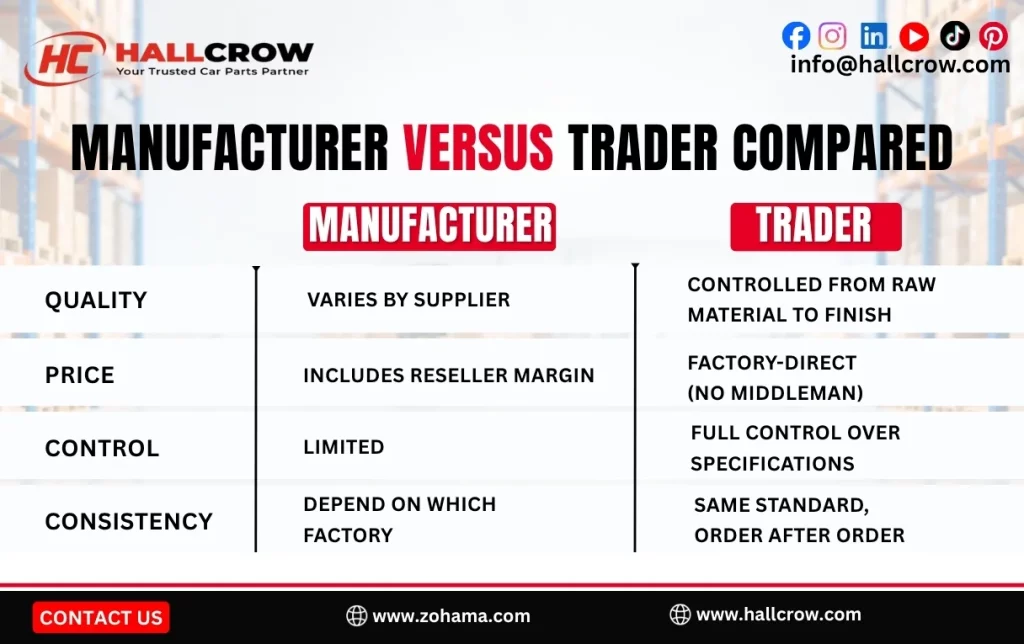
Here is what the distinction means in practice:
| A trader | A manufacturer like HallCrow |
|---|---|
| Buys finished parts from various factories and resells them. | Designs and produces the parts in its own facility. |
| Quality varies with whichever factory supplied that batch. | Quality is controlled from raw material to finished part. |
| Price includes a reseller margin. | Factory-direct price, no middleman. |
| Limited say over specification or consistency. | Full control over specification, testing and repeat runs. |
Why It Matters More on Heavy-Vehicle Parts
On a phone case, sourcing from a trader is low risk. On a brake pad for a loaded truck, it is not. Heavy-vehicle parts are safety-critical and bought in volume, so any inconsistency multiplies across a fleet and across every container you import. A manufacturer who controls the process can hold the same specification run after run; a trader is only ever as consistent as whichever factory filled the last order. For heavy vehicles, that consistency is the whole game, which is why it is worth insisting on for heavy vehicle parts.
What a Manufacturer Gives a Distributor
- Consistent quality, because one facility controls material, production and testing.
- Factory-direct pricing, with no reseller margin stacked on top.
- Technical support, real cross-reference data and test results, not just a price list.
- Scalable, repeatable supply, the same part, to the same spec, order after order.
How to Tell a Manufacturer From a Trader
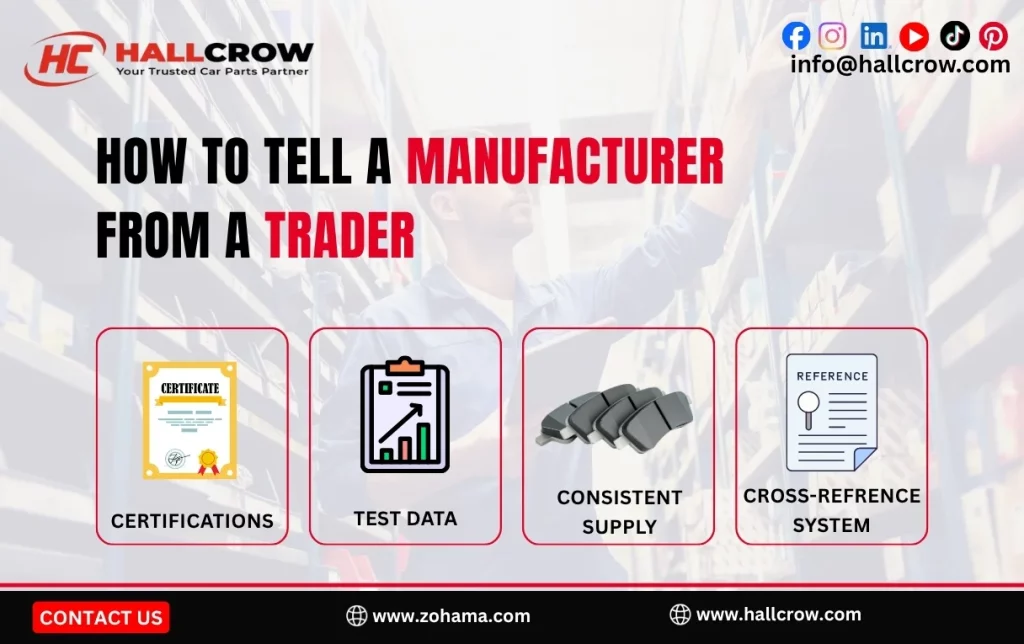
Traders rarely announce themselves, so check the signals a real manufacturer can show:
- Certifications in the company’s own name (ISO 9001, IATF 16949), not borrowed from a factory.
- Test data and technical documentation they can produce on request.
- Consistent samples across batches, not a great first sample and a variable second.
- A clear product identity and cross-reference system, as on our brake pads range.
The Bottom Line for Your Business
The cheapest quote is not always the cheapest supplier once returns, complaints and inconsistency are counted over a year. Sourcing from a manufacturer protects your margin by protecting your quality, and gives you a partner who can grow with your business. If you want to source heavy-vehicle parts direct from the maker, explore what we manufacture on our products page or talk to our team through contact us.
Frequently Asked Questions
Is it always better to buy from a manufacturer than a trader?
For safety-critical, high-volume heavy-vehicle parts, yes. A manufacturer controls quality and price directly, which matters far more over repeat orders than a slightly lower one-off quote from a reseller.
How can I tell if a supplier is a real manufacturer?
Look for certifications in the company’s own name, test data and technical documentation they can produce, consistent samples across batches, and a clear product and cross-reference system.
Do manufacturers only sell in large volumes?
Manufacturers are built for volume and repeat orders, but a genuine one will still discuss your requirements and scale supply as your business grows.
Why does the manufacturer-versus-trader difference affect price?
A trader adds a reseller margin on top of the factory price, while a manufacturer sells factory-direct, so you deal with the maker and the margin stays in your business.
Conclusion
Manufacturer or trader is not a technicality; it is the decision that quietly sets your quality, your margin and your risk. For heavy-vehicle parts, where consistency is safety and volume multiplies every choice, sourcing from a real manufacturer is the stronger long-term position. Ask the simple question first, check the signals, and build your supply on a maker rather than a middleman.