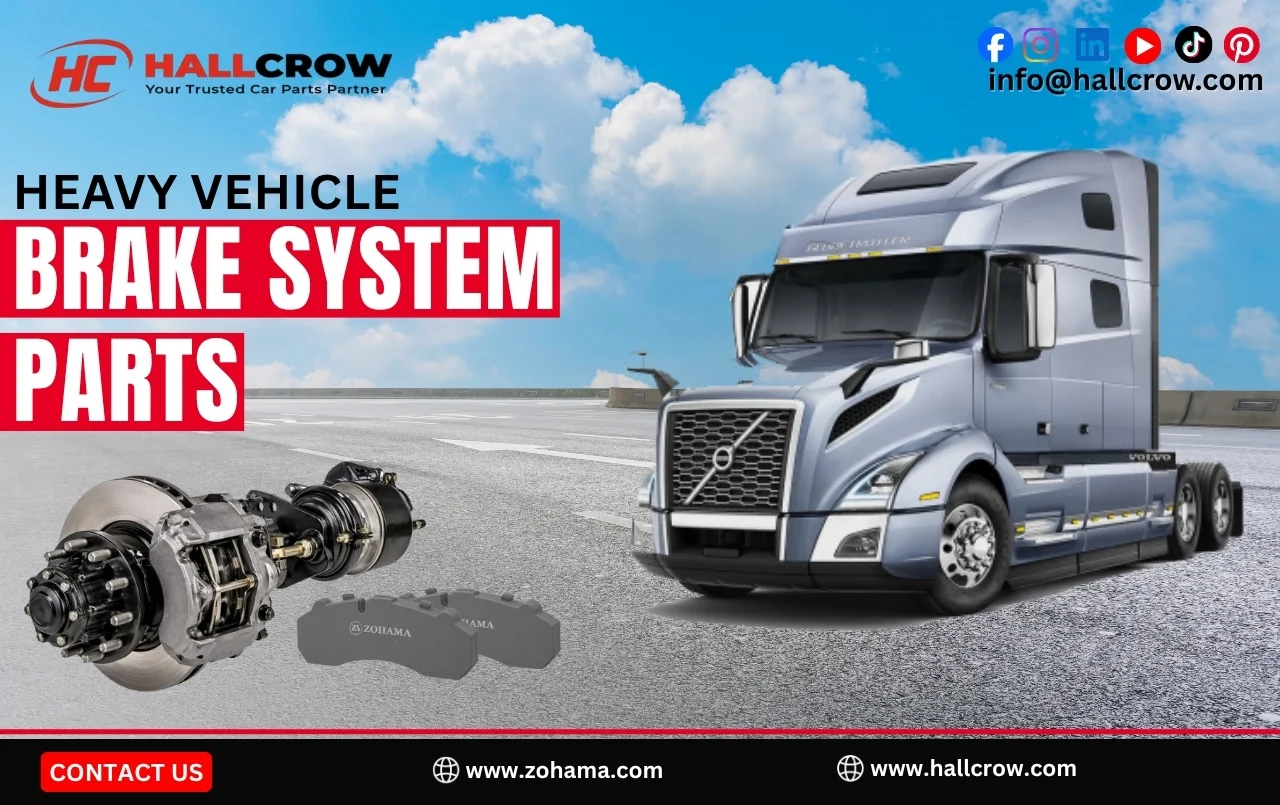
A heavy vehicle’s brake system is not one part; it is a chain of components that has to work together to stop a loaded truck or bus safely. For a distributor, understanding that chain is what turns a box of individual parts into a properly stocked braking range. This guide walks through the system component by component, explains how each one earns its place, and points out what matters when you source them.
For the full range HallCrow manufactures, see our brake system page. This guide is the background behind it.
How a Heavy-Vehicle Brake System Works
When a driver brakes, the system converts the vehicle’s motion into heat through friction, and then gets rid of that heat before it becomes a problem. On a loaded commercial vehicle that energy is enormous, so every component in the chain has to handle far more heat and force than anything on a car. Most modern trucks and trailers use air-actuated disc brakes; many older and budget vehicles still use drums. Both do the same job through different hardware.
The Components, One by One
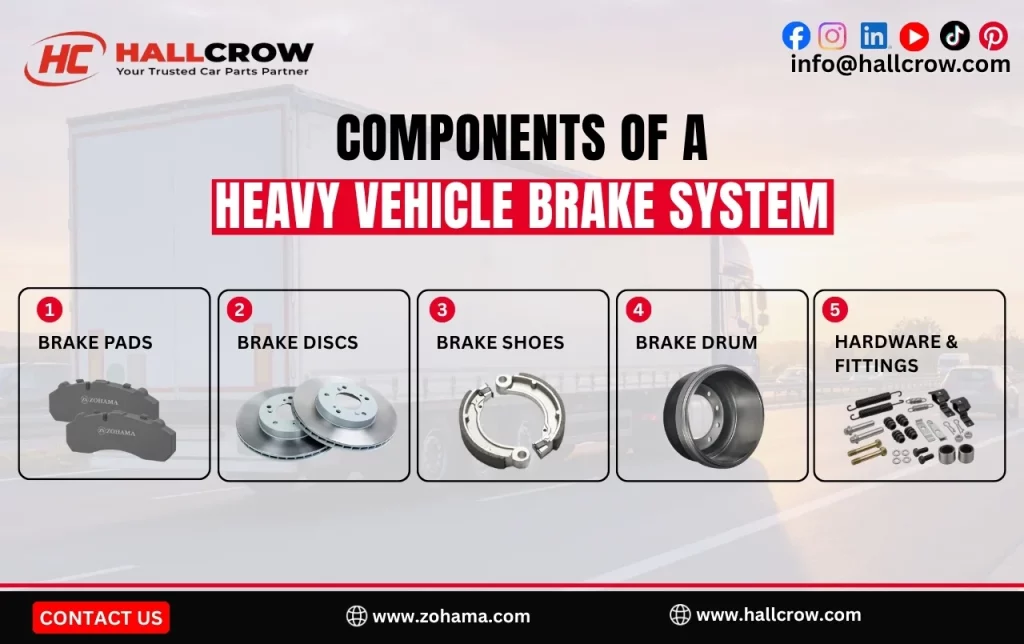
Here is the chain, in the order the force travels, and what each part does:
- Brake pads. On disc systems, pads are squeezed against the disc to create friction. They are the fastest-wearing part and the one distributors sell most, so they anchor any brake range. See our brake pads.
- Brake discs (rotors). The pads clamp onto these. On heavy vehicles they must dissipate heat fast and resist warping under repeated braking.
- Brake shoes and linings. On drum systems, shoes press outward against the drum. Still common on older and budget commercial vehicles and some rear axles.
- Brake drums. The enclosed surface the shoes act on, built to take high load and repeated cycles.
- Hardware and fittings. Shims, clips and fittings that hold everything in place and let it move correctly. Small parts, but wrong or missing ones cause noise and uneven wear.
Disc or Drum: Which Parts You Stock
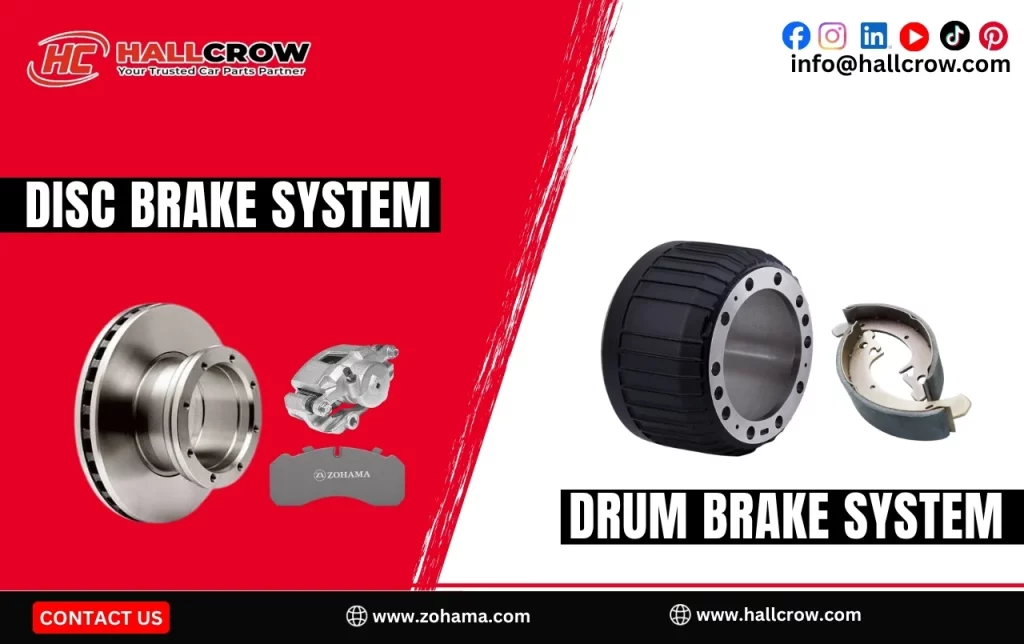
The single biggest factor in what a distributor stocks is whether the vehicles in the market run disc or drum brakes. Air-disc vehicles need pads and discs; drum vehicles need shoes, linings and drums. Newer fleets lean disc; older and budget markets keep steady drum demand. Most distributors stock both, matched to the vehicles they actually serve. Understanding this split is the foundation of a balanced brake range.
What Makes a Heavy-Vehicle Brake Part Good
Whatever the component, three things separate a dependable part from a risky one on a commercial vehicle:
- Heat and fade resistance, because loaded braking generates sustained heat.
- Correct, exact fitment, confirmed by WVA and OE number, not by eye.
- Consistent quality batch to batch, so every order performs like the last.
Sourcing the System From One Manufacturer
A brake system is easiest to stock when every part comes from one manufacturer held to one standard, so a mixed order performs consistently. HallCrow Automotive manufactures the full heavy-vehicle brake range, from pads and discs to shoes, drums and hardware, in its own facility. That means a distributor can build a complete braking range from a single source, with factory-direct pricing and matching quality across the whole system. Explore what we make on the brake system page, or see the wider products range.
Frequently Asked Questions
What parts make up a heavy-vehicle brake system?
Brake pads and discs on air-disc systems, brake shoes, linings and drums on drum systems, plus the hardware and fittings that hold everything in place and let it move correctly.
Do commercial vehicles use disc or drum brakes?
Both. Newer trucks, buses and trailers largely use air-disc brakes, while older and budget vehicles, and some rear axles, still use drums, so many fleets run a mix.
Which brake parts sell the most?
Brake pads, because they are the fastest-wearing component, which is why they anchor most distributors’ brake ranges, followed by shoes and linings in drum-heavy markets.
Why source the whole brake system from one manufacturer?
One manufacturer means one quality standard across every part, so a mixed brake order performs consistently, with factory-direct pricing and a single point of contact.
Conclusion
A heavy-vehicle brake system is a chain, and a distributor who understands the whole chain stocks it better than one who sees only individual parts. Know how the components work together, match disc or drum to your market, judge every part on heat resistance, fitment and consistency, and source the system from one manufacturer held to one standard. Do that and your brake range becomes a complete, dependable line rather than a shelf of loose parts.