China makes more heavy-vehicle parts than anywhere on earth, which is exactly why choosing the right manufacturer there is hard: there are thousands of suppliers, and many of them are traders dressed as factories. For a distributor importing truck and bus parts, picking the right one protects your quality, your margin and your reputation. This is a practical checklist of what to look for, and what should make you walk away.
For the range HallCrow manufactures in China, see our heavy vehicle auto parts manufacturer in China page.
First, Confirm It Is Actually a Manufacturer
The most common trap is a trading company that presents itself as a factory. It sources finished parts from various suppliers and resells them, which means the quality you get shifts with whichever factory filled that batch. A genuine manufacturer controls production in its own facility, so before anything else, confirm you are dealing with the one that makes the part, not the one that moves it.
The Checklist: Seven Things to Verify
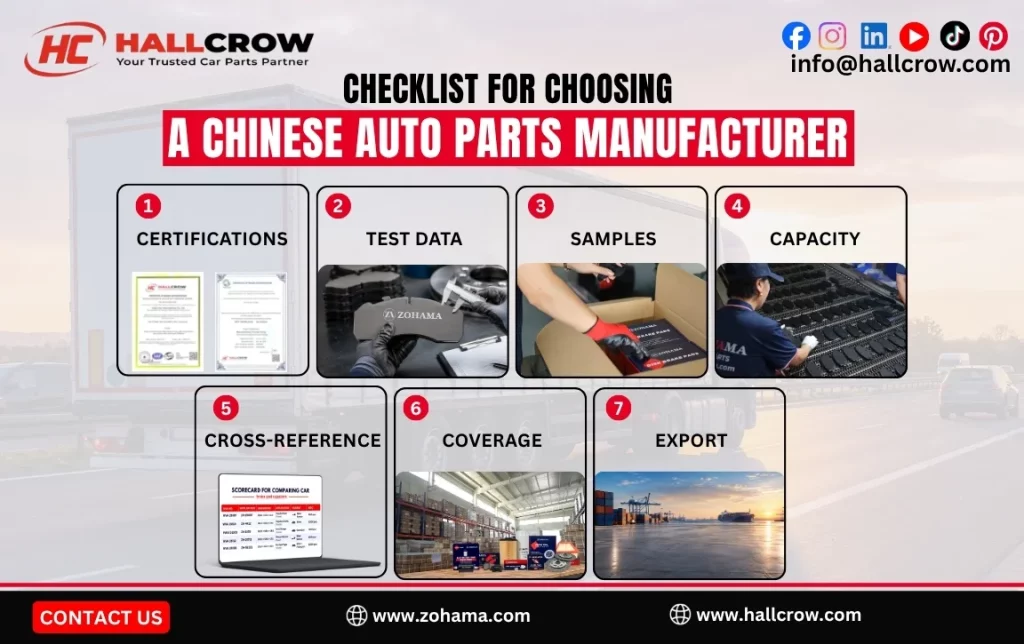
Run any Chinese auto parts manufacturer through these seven checks before you commit:
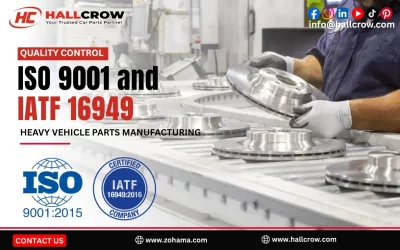
- Certifications in the company’s own name. ISO 9001 and IATF 16949 issued to the manufacturer, not borrowed from a factory they buy from.
- Test data on request. Friction, heat and wear results they can produce, especially for heavy-vehicle parts.
- Consistent samples. A great first sample means little; ask for samples across batches and check they match.
- Production capacity. The ability to supply fleet volumes consistently, run after run, not just a first order.
- Cross-reference support. Clear WVA and OE data so you can confirm fitment and sell on it.
- Product coverage. A range that matches the vehicles in your market, ideally across systems from one source.
- Export experience. A supplier who has shipped to your region and knows its documentation.
The Heavy-Vehicle Difference
For heavy vehicles, these checks matter even more. Truck and bus parts are safety-critical and bought in volume, so a weak supplier does not fail quietly; it fails across a fleet and across every container. That is why testing and capacity sit near the top of the list for commercial parts, more than they would for a low-risk product. Explore what this looks like in practice on our heavy vehicle brake system range.
Red Flags: When to Walk Away
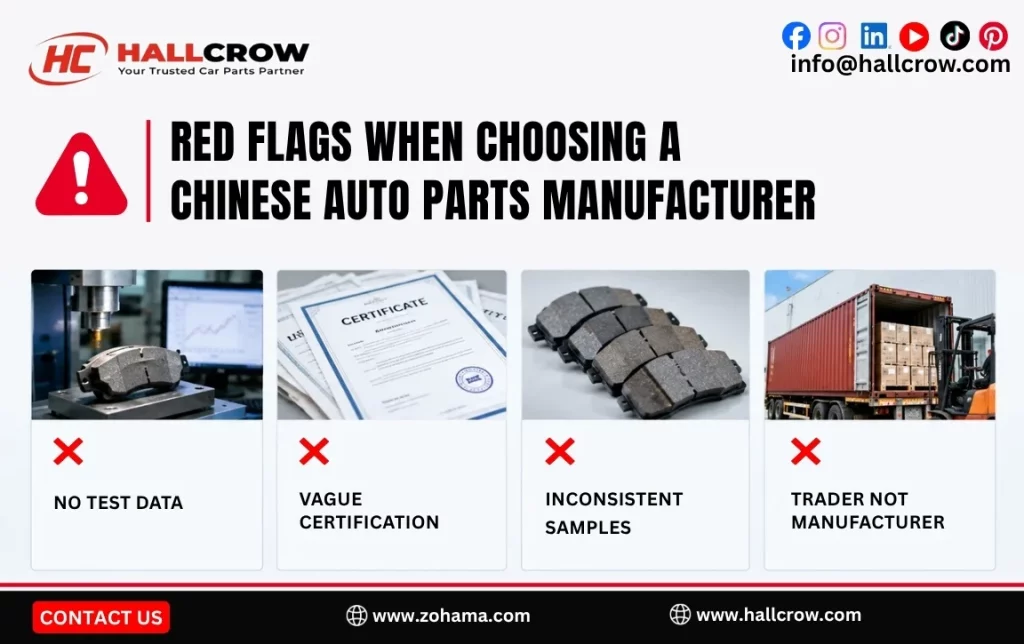
- No test data for safety-critical parts.
- Certificates that do not name the company or do not cover the actual products.
- Samples that vary between batches.
- Vague answers on capacity or where the parts are actually made.
- Weak or missing cross-reference data, which makes fitment and selling harder.
Trust Signals That Point the Right Way
Just as some signs warn you off, others point to a manufacturer worth building on: a named company and factory with a transparent contact presence, real facility and product photography rather than stock images, evidence for certifications with the issuing body and scope, and specific manufacturing and testing information a buyer can actually verify. A supplier confident enough to show these is usually one worth talking to.
Make the Right Choice
Choosing a Chinese auto parts manufacturer is a decision you live with for years, so it is worth the scrutiny: confirm it is a real manufacturer, run the seven checks, watch for the red flags, and favour the trust signals. If you want a certified manufacturer with tested heavy-vehicle parts and real cross-reference support, explore what we make on our products page, or talk to our team through contact us.
Frequently Asked Questions
How do I know a Chinese supplier is a real manufacturer, not a trader?
Look for certifications in the company’s own name, test data and technical documentation they can produce, consistent samples across batches, and transparency about where the parts are made.
What certifications should a Chinese auto parts manufacturer have?
ISO 9001 for quality management and IATF 16949 for automotive production, plus ECE R90 for brake products, all issued to the manufacturer and covering the actual products.
Why do the checks matter more for heavy-vehicle parts?
Truck and bus parts are safety-critical and bought in volume, so a weak supplier fails across a fleet and every container. Testing and capacity therefore matter more than for low-risk products.
What are the biggest red flags?
No test data, certificates that do not name the company or products, samples that vary between batches, vague answers on capacity, and weak cross-reference data.
Conclusion
China’s scale is an advantage only if you pick the right manufacturer within it. Confirm you are dealing with a real factory, run every supplier through the seven checks, walk away from the red flags, and favour the ones confident enough to show their credentials. For heavy-vehicle parts, where a weak supplier multiplies risk across a fleet, that discipline is the difference between a dependable long-term partner and an expensive mistake.